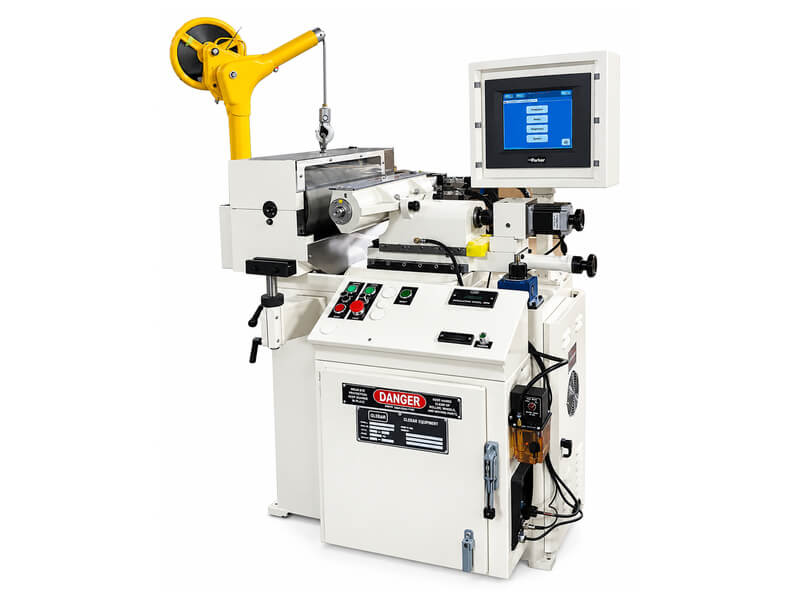
Carbide Rods (Tungsten) | PG-9X20DHD
Challenge
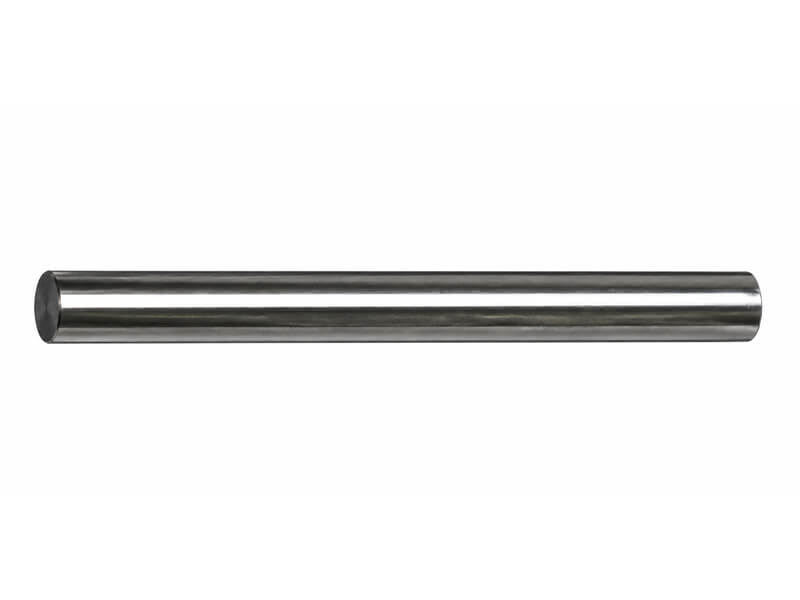
The challenge was to establish a process to pre-size pre-sintered carbide drill blanks processed in a hot isostatic press (HIP), producing straight rod stock suitable for long-blank applications. The existing manufacturing method sinters carbide rods in a HIP before grinding them to size in their hardened state, prior to the fluting operation. This approach requires multiple thrufeed grinding passes post-sintering to bring the carbide to its final diameter and achieve the required uniform consistency, a labor-intensive process that accelerates wear on both the grinding machine and tooling. The challenge is compounded by the non-uniform, irregular surface typical of hard carbide after sintering, which demands additional passes to achieve the dimensional accuracy and surface uniformity needed for downstream operations.
Process
The Glebar PG-9X20DHD Form Grinding Machine offers a more efficient alternative by infeed grinding carbide in its soft, pre-sintered “bisque state” up to 20 inches wide in a single operation. At this stage, the material has the consistency of chalk, allowing the machine to gently remove surface imperfections and size the rod to near-net shape in one pass, preparing it for sintering. Because the material enters sintering already close to its final geometry, it requires far fewer post-sintering grinding passes, streamlining the overall workflow. Additional benefits include reclaiming carbide dust, reducing tooling costs for the final thrufeed grinding operation, and meaningfully reducing the overall cost of manufacturing the drill blank.
Contact an EngineerSolution: Glebar PG-9×20 DHD
The Glebar PG-9×20-DHD Centerless Form Grinder is designed to form ceramic components, such as unfired carbide and crystal quartz glass boules used to produce fiber optics, by form-grinding carbide in the soft state to near-net size.