Increase Memory for Programming with Companion Software from Tridex Technology | CS1-EA
Challenge
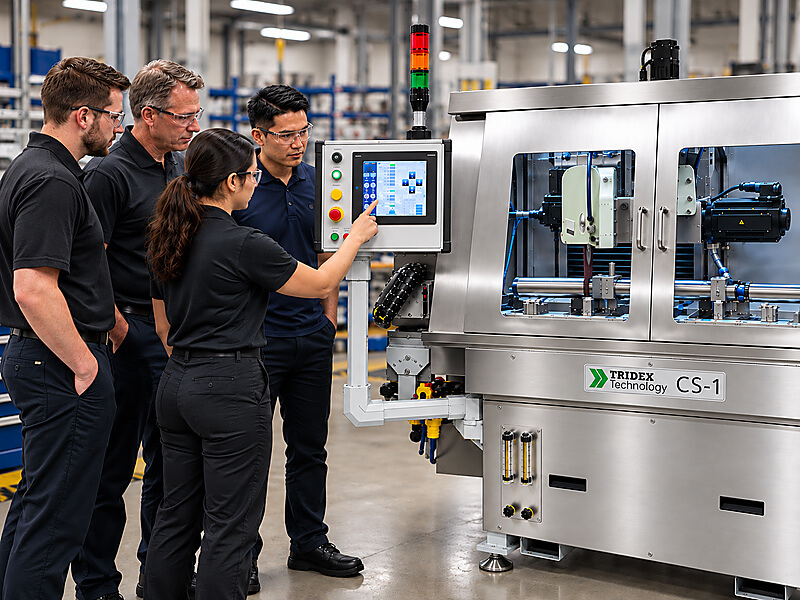
Tridex CS1 machines store up to 100 setups, while PLC-controlled SG machines store up to 30, limiting how many programs each machine can archive. Programming and training must be performed directly at the operator screen, reducing machine availability for production. Manual program entry is time-consuming and creates the risk of editing errors or unauthorized changes at the machine, leading to higher scrap rates or potential machine crashes. Developing an effective solution for offline program archiving, editing, and transfer across multiple machines was critical to improving productivity, reducing errors, and supporting operator training without limiting machine uptime.
Process
Tridex Companion Software for the CS1 and SG series machines converts setups, cut lists, and user programs into Windows files, enabling unlimited offline storage and archiving. Technicians can create, edit, and transfer programs to machines via PC or remote internet connection through the customer’s network, using editor functions identical to those on the machine controls for a seamless transition. Offline editing allows technicians to transfer all saved programs at once, significantly reducing machine setup times, while restricting operator access at the machine prevents unauthorized changes and reduces scrap rates. Training can also be conducted offline in an open environment, removing the constraints of on-machine instruction.
Contact an Engineer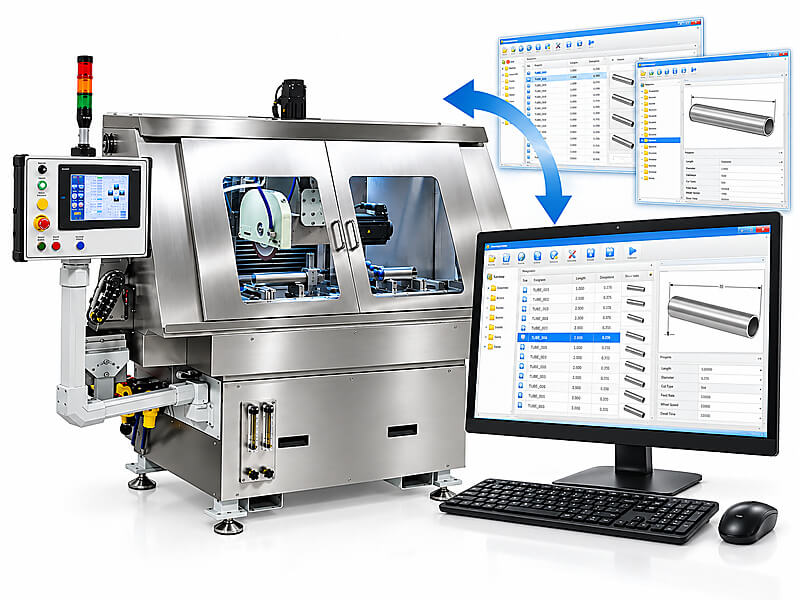
Solution: Tridex Electrochemical Grinding
Tridex Electrochemical Grinding (ECG) combines abrasive grinding with electrochemical erosion to deliver burr-free, low-force material removal without heat-affected zones, recast layers, or metallurgical damage, virtually eliminating the need for secondary deburring and corrective operations. The process works independently of material hardness or temper, making it equally effective across stainless steel, nickel alloys, Nitinol, and other difficult-to-machine materials. Significantly reduced cutting forces extend wheel life exponentially over conventional grinding methods, lowering consumable costs and increasing uptime. The result is a faster, cleaner, and more cost-effective alternative to traditional surface grinding that improves part quality, reduces scrap, and streamlines production.