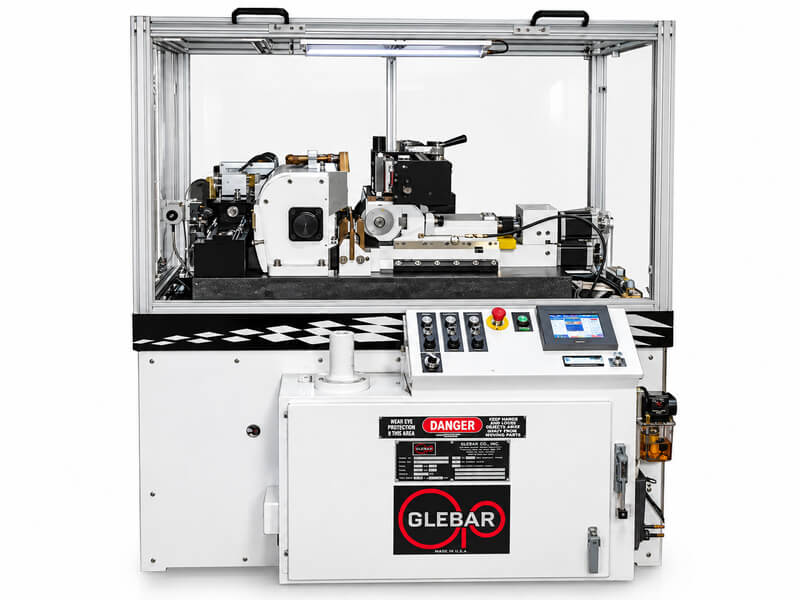
Catheter Bodies | Glebar TF-9D
Challenge
To point and shape catheter bodies free of debris and scratches at high production rates.
Process
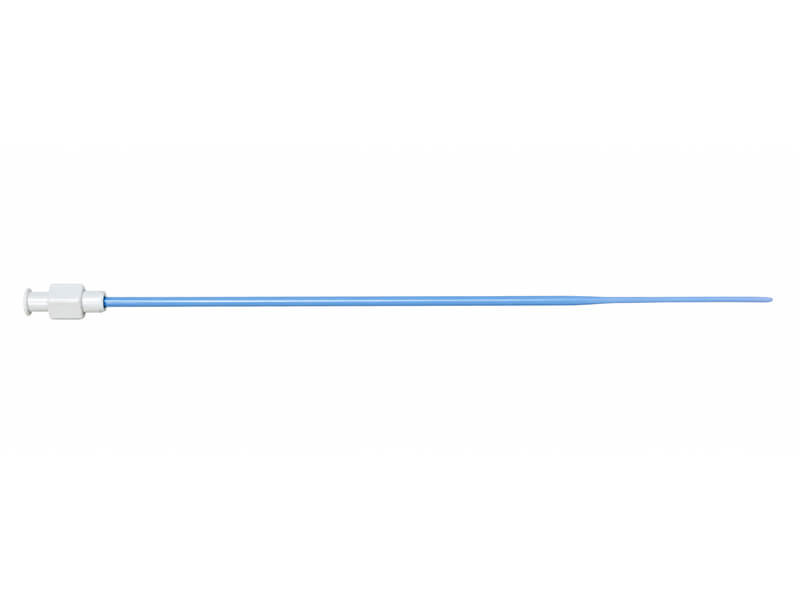
Some catheters require a grinding operation after extrusion to taper the distal end for improved flexibility. When different durometer tubes are bonded or welded to achieve that flexibility, the grinding process must accommodate multiple materials while keeping catheters free of debris and scratches, maintaining concentricity, and preserving wall thickness throughout.
The Glebar TF-9DHD Thrufeed Centerless Grinder addresses all of these challenges in a single, automated solution. Its 8-5/8-inch-wide grinding wheel distributes the grind across twice the surface area of competing systems, producing smoother surface finishes with less stress on the part. The wider wheel also allows for progressively finer grit across its span, with a coarser entrance and finer exit to optimize material removal and surface quality in a single pass. Pressure washing the grinding wheel throughout the process prevents wheel loading, maintaining sharpness and consistency. Automatic loaders and unloaders complete the solution, fully automating the process and significantly reducing labor costs.
Contact an EngineerSolution: Glebar TF-9D Infeed/Thrufeed Centerless Grinder
The Glebar TF-9D Infeed/Thrufeed Centerless Grinder uses computer controls to grind both hard and soft materials, including catheters, medical guidewires, and spinal cord stimulators. Inside the compact footprint is a 7HP main spindle motor powering an 8.625” wide work wheel, combining to remove more material faster and with better surface finishes than similar machines with narrower grinding wheels. The TF-9D is designed to boost productivity through a simple control interface and integration with automation. Common applications include guidewires, catheter bodies, spinal cord stimulators, pins, and other engineered materials.