Automation Trends Shaping the Next Generation of Medical Device Manufacturing​

A Conversation on Automation, Complexity, and What OEMs Need Next

Medical device manufacturing is entering a new era of complexity. Devices are getting smaller and more sophisticated, catheter designs are becoming increasingly intricate, and manufacturers are being asked to achieve tighter tolerances while simultaneously improving throughput, consistency and scalability.

For OEMs, these trends are changing what they need from their manufacturing partners.

We sat down with automation experts Dave McMorrow and Michael Wall to discuss the trends shaping catheter and medical device manufacturing, what OEMs are asking for today, and how advances in automation, tooling and manufacturing technology are helping solve increasingly complex production challenges.
What are some of the biggest trends you’re seeing in medical device manufacturing automation today?

Michael Wall: Rather than viewing automation simply as a way to increase production speed, manufacturers are looking at how it can improve consistency, reduce manual processes, address labor constraints and create more predictable manufacturing environments.

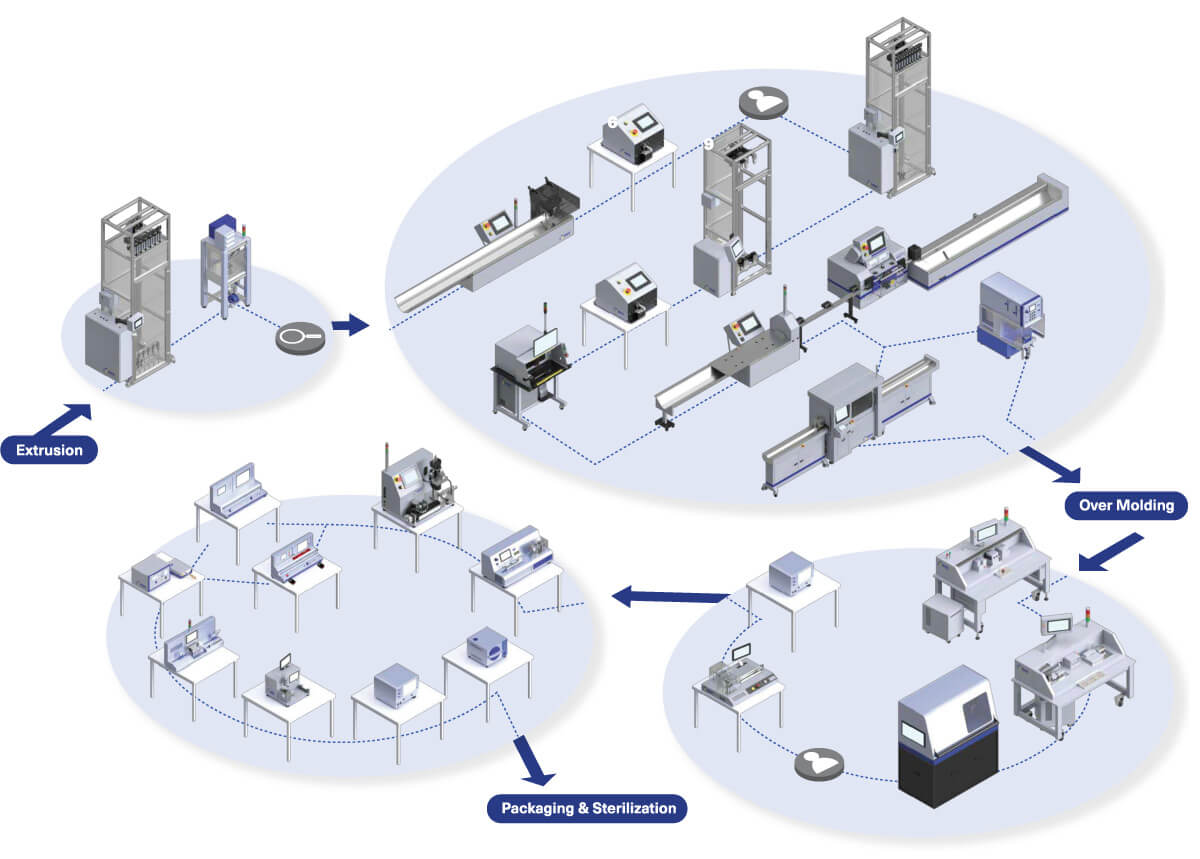
Another important trend is the desire to consolidate manufacturing processes. OEMs increasingly want partners capable of supporting multiple stages of production rather than coordinating numerous individual suppliers.

The result is a shift toward more integrated manufacturing strategies where equipment, processes and automation are designed to work together.

What are OEMS asking for today?

Dave McMorrow: OEMs are looking for solutions to several challenges simultaneously. They need greater manufacturing efficiency, but they also need flexibility without sacrificing throughput. They want to automate processes, but the automation needs to accommodate increasingly sophisticated device designs.

Many conversations therefore begin with questions such as

  • How can we increase throughput?
  • Where can we eliminate repetitive manual operations?
  • How can we improve process consistency?
  • How can we reduce operator dependency?
  • How do we transition a process from development into scalable production?
  • Can multiple manufacturing steps be integrated into one automated workflow?

The discussion simply isn’t about purchasing an individual machine. It’s about understanding the entire manufacturing process and identifying where technology can have the greatest impact.

The bigger question isn’t simply what technologies OEMs will need tomorrow – it’s what they’ll need their manufacturing partners to make possible. Can you speak to this?

MW: The next generation of medical devices will likely require manufacturing systems that are even more connected and scalable.

As device designs evolve, manufacturers will need equipment capable of adapting to new product configurations and production requirements. That means automation strategies need to consider not only today’s production challenge, but also what happens when volumes increase or product designs change.

The best manufacturing solution isn’t necessarily the one that solves a single operation. It’s the one that helps create a production platform capable of evolving with the device.


What should OEMs look for in an automation partner?

DM: Choosing the right automation partner is about more than finding a company that can build a machine. OEMs should look for a partner that takes the time to understand their product, manufacturing process, challenges and longer-term goals.

A well-aligned automation partner should be asking questions from the start. Where are the bottlenecks? Where is there too much variability? What processes are creating quality issues or requiring too much manual intervention? And just as importantly, where does automation actually make sense?

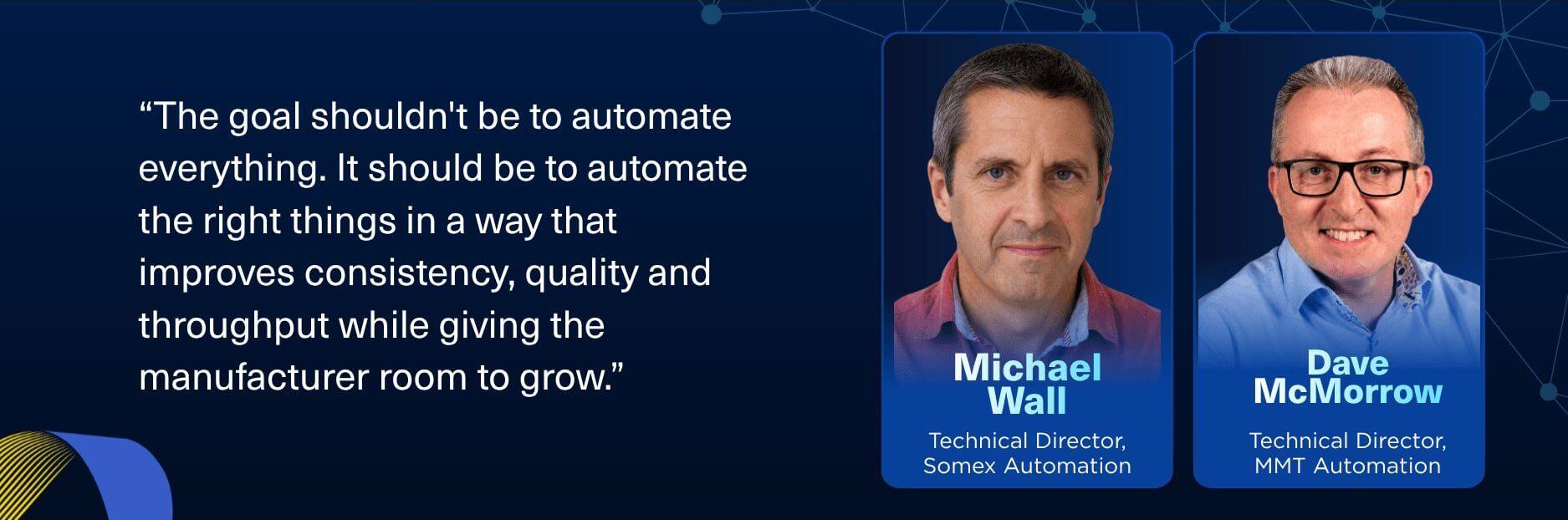
The goal shouldn’t be to automate everything. It should be to automate the right things in a way that improves consistency, quality and throughput while giving the manufacturer room to grow.


More importantly, what questions should OEMs ask potential automation partners?

MW: When evaluating an automation partner, some of the most important questions include:

  1. Have you automated a process like ours before, and how would you improve it? Look for relevant medical device manufacturing experience and a partner who can identify opportunities to optimize the process—not simply build to a specification.
  2. What should we automate—and what shouldn’t we? Not every manual process needs to be automated. A strong partner should help identify where automation will deliver the greatest value in quality, throughput, consistency and labor utilization.
  3. How will the system support quality, validation and process visibility? Ask how vision, inspection, sensors, process controls and data collection will support quality, traceability and validation requirements, including IQ/OQ/PQ.
  4. Can the system adapt and grow with us? Consider whether the equipment can accommodate product changes, additional SKUs, new tooling and processes, or increased production requirements without requiring an entirely new system.
  5. What does support and success look like after installation? Understand the partner’s approach to training, service, spare parts, troubleshooting and ongoing technical support—and how they will measure the system’s long-term impact on your manufacturing operation.

One of the best questions OEMs can ask is simply, “If this were your manufacturing process, what would you differently?”

DM: The answer can tell you a lot about the partner you’re considering. The right automation company shouldn’t just take an existing process and put a machine around it. They should bring ideas to the table, challenge assumptions when necessary, and help identify a better way to manufacture the product.

Ultimately, OEMs should look for a partner that approaches automation as a manufacturing challenge to solve—not just a piece of equipment to build.
About MMT Automation

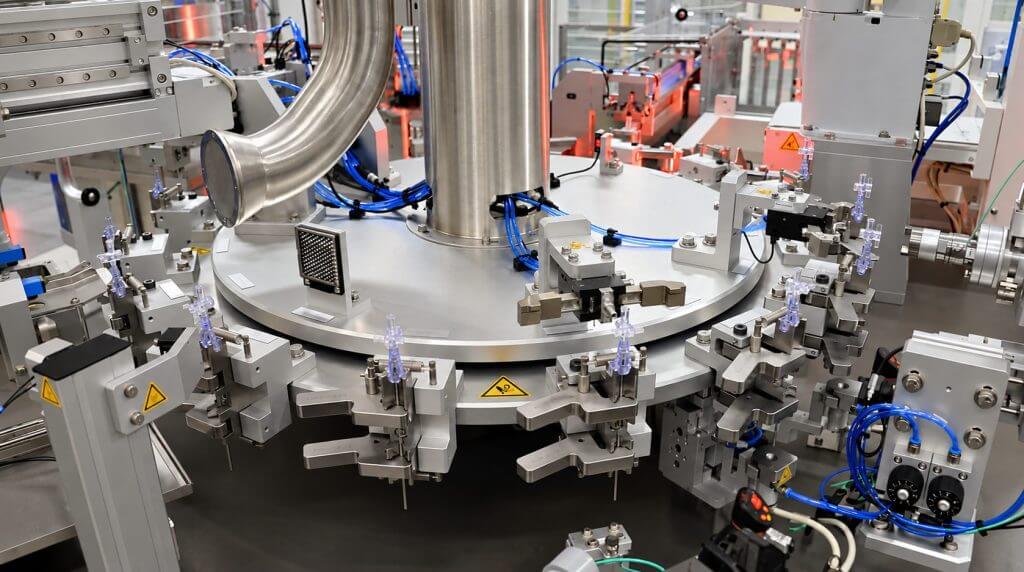
MMT Automation delivers custom, integrated automation solutions designed to solve complex medical device manufacturing challenges. From feeding, assembly and processing to vision inspection and quality control, MMT combines deep process expertise with advanced automation technologies to improve throughput, consistency and scalability while reducing manual intervention.

Let’s build something together!
Precision Shot Peening for Orthopedic Devices

What is Precision Shot Peening and Why is it Needed?

Shot peening is a well established technology in the aerospace industry used to increase strength while reducing weight. It works best on parts that experience cyclic fatigue. Shot peening, by nature, alters the outer layer of a part. By bombarding it with spherical media, the molecules in the region are realigned and compressed. In a cyclic fatigue environment this compression must be overcome before the part enters tension, where micro-cracks – and ultimately failure – occurs.

Precision shot peening applies the principles of MicroBlasting to conventional shot peening, resulting in a technology that caters to smaller devices with a much more targeted and measured approach.

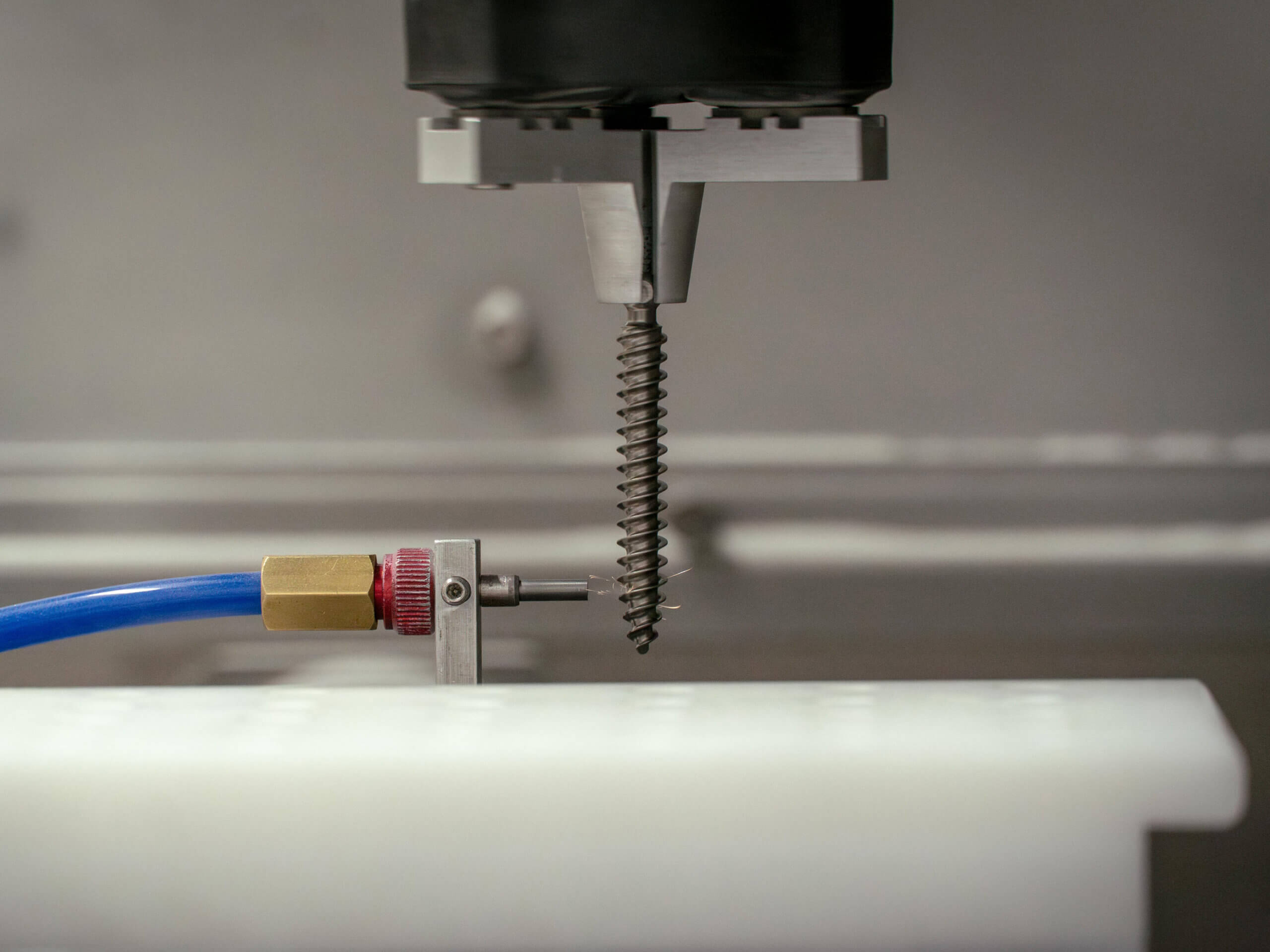
Medical implants must be strong, long lasting and appropriately sized. Spinal surgery components such as rods, heads and screws experience a significant amount of cyclic fatigue from the simple motion of walking. Each step causes motion in multiple directions. Both the small size and fine threads on bone screws are prefect candidates for precision shot peening.

How is Precision Shot Peening Measured?

Regardless of the peening process, the effectiveness is measured by intensity and coverage. Intensity is measured using standardized Almen strips that are bent by the impact of the shot stream. The Almen intensity is determined by measuring the arc height of the strip after peening. Coverage is measured visually or by spectrometer to ensure sufficient coverage of at least 98% to determine the process is complete.

Precision Shot Peening with the AccuFlo and JetCenter

When it comes to small parts, industrial shot peening equipment is not appropriate. Comco’s AccuFlo Mico-precision sandblasting technology provides an accurately metered flow of precision shot material necessary to obtain consistent results.

Comco’s automated platform, the JetCenter, completes the system. Through our engineering expertise working with abrasive environments, we’ve built the system tough enough to withstand the harsh environment shot peening entails.

This combination of technologies combines a uniform media stream that is focused and controllable. This eliminates the need for masking, resulting in greater coverage with fewer passes and less shot being wasted.

Case Study: Bone Screws

Glass bead creates a compressive layer on the surface of the threads. This layer helps to improve the fatigue life on the bone screw. Note: Over-blasting—or blasting too forcefully for too long or with too much abrasive—rounds or dull most part edges. Therefore it is essential to acutely monitor blast time and coverage.

Recommended Approach

  • Nozzle: 0.046” or 0.060” Hi/Performance
  • Pressure: 60-100 psi
  • Abrasive: 50 µ or 100 µ Glass Bead
  • Orifice: 0.030″


Work with our Engineers to Develop the Optimal Manufacturing Solution

Whether you’re developing a complete process or addressing a specific manufacturing challenge, our engineers are ready to help. We understand that no two applications are alike, which is why we work closely with you to identify the solution best suited to your unique requirements.

Powering Arthroscopic Shaver Manufacturing from Start to Finish

Arthroscopic shavers demand tight tolerances, exceptional cutting performance, and consistent quality across high-volume production. Achieving these requirements relies on a combination of precision abrasive and grinding technologies, each contributing unique capabilities throughout the manufacturing process.

From centerless grinding and electrochemical grinding (ECG) to micro-abrasive blasting, manufacturers often employ multiple complementary processes to produce the complex geometries, sharp cutting features, surface finishes, and edge conditions required for arthroscopic blades and burrs.

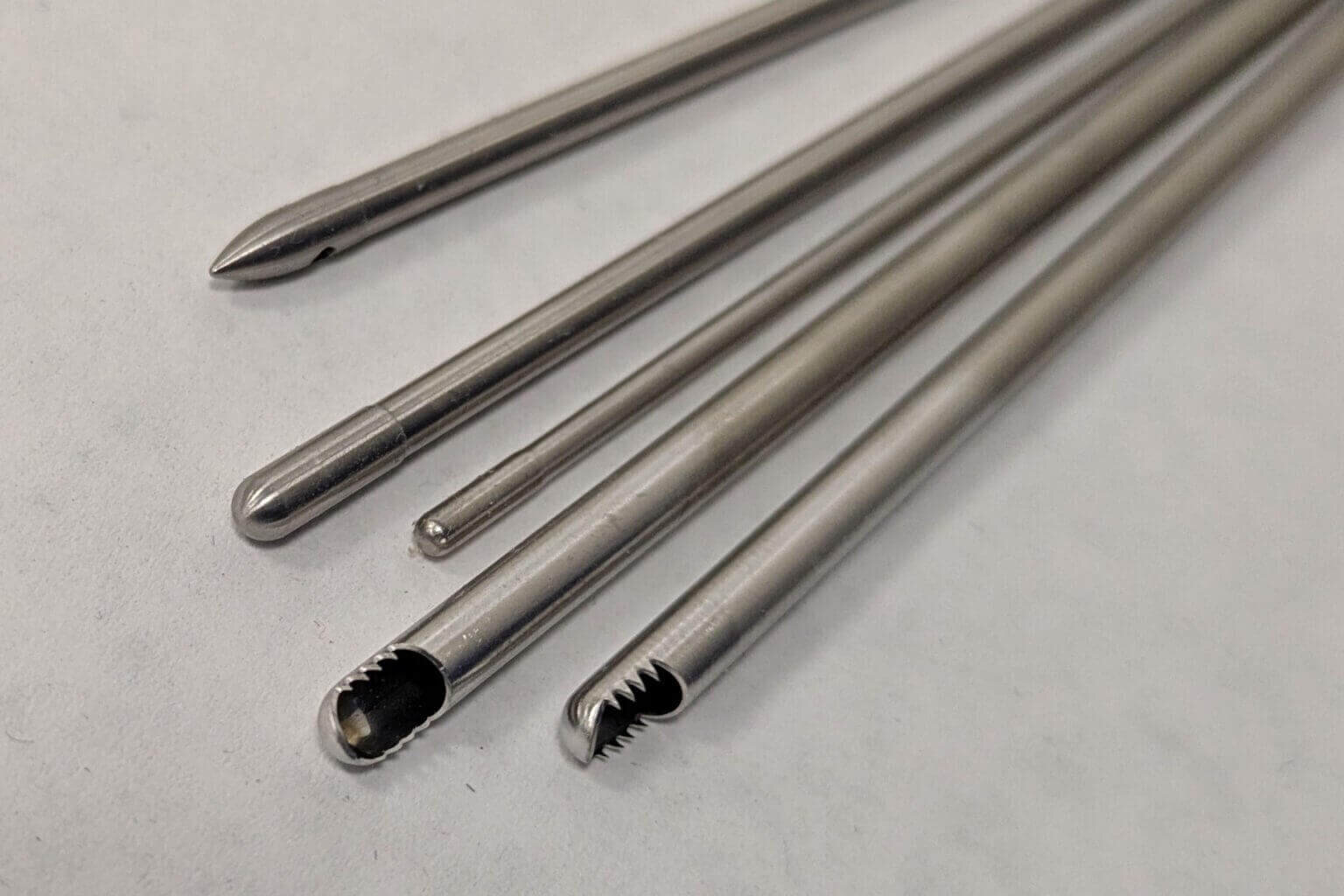
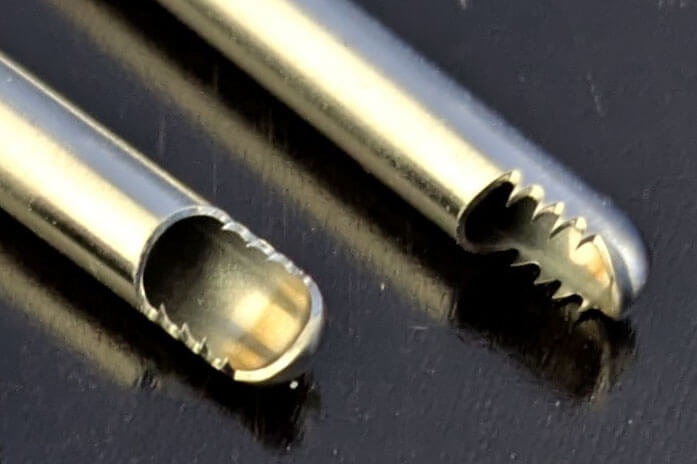
Arthroscopic shavers

Rather than functioning as standalone operations, these technologies are often integrated into a comprehensive manufacturing workflow, with each process contributing to distinct capabilities:

  • Centerless Grinding establishes critical diameters and concentricity;
  • ECG enables burr-free machining of complex features while preserving material integrity; and
  • MicroBlasting provides precise surface conditioning, edge refinement, and finishing capabilities.

The following Case Studies highlight how these technologies work together to help manufacturers meet the demanding quality, performance, and production requirements of arthroscopic components.

Challenge #1: To Grind Two Mating Metal Components to Tight Tolerances

The foundation of an arthroscopic shaver is a pair of bull-nosed tubes, with the inner tube precisely nested within the outer tube. Both components must be ground to tight tolerances—typically within 0.0005″—to ensure smooth rotation while minimizing the potential for debris to enter the interface. The tips of the tubes typically have a rounded guiding surface, and the outer tube has a window cut into it to expose the sharp edges of the inner tube.
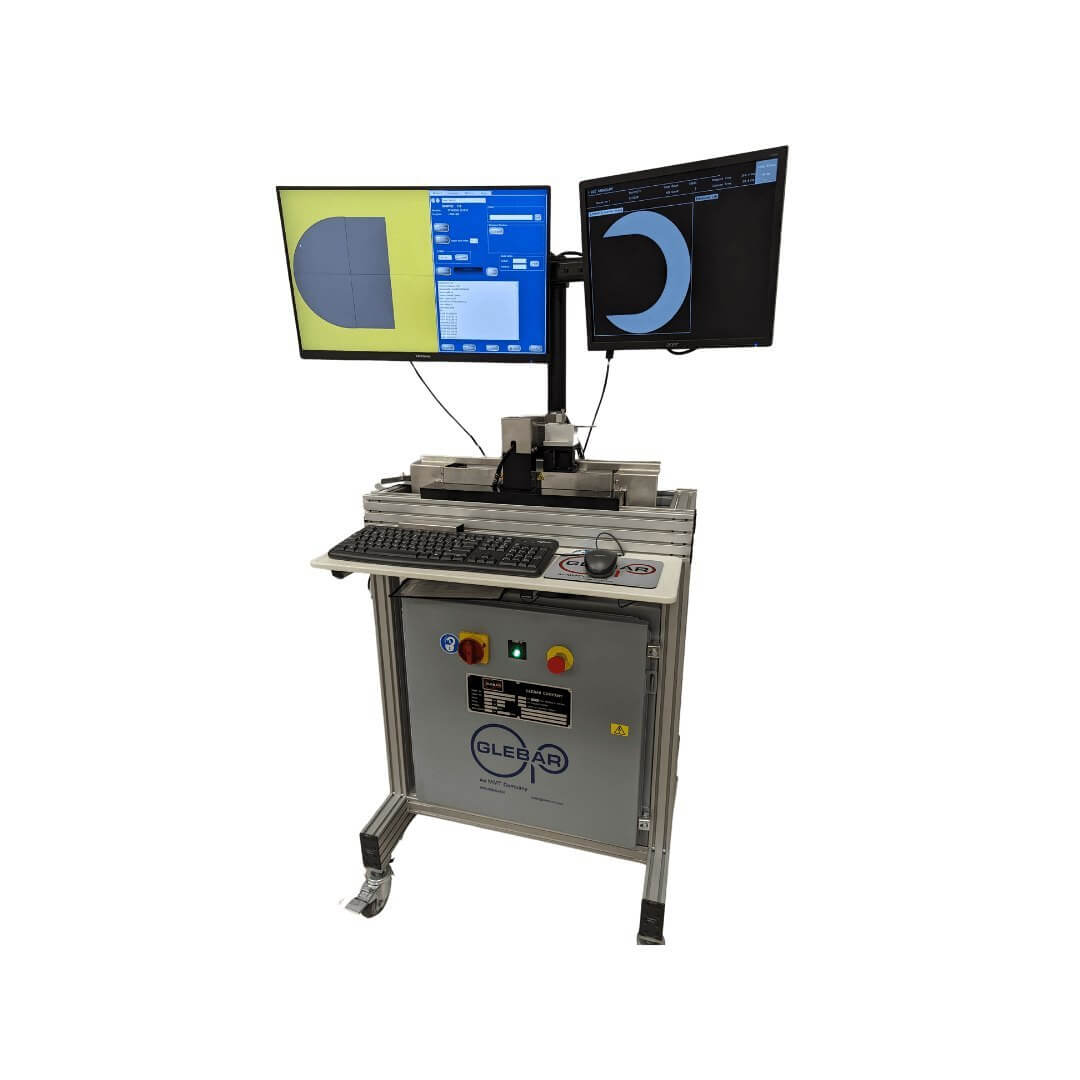
Recommended Approach: Glebar GT-610 Thrufeed Grinder & P4200 Profile Gauging System

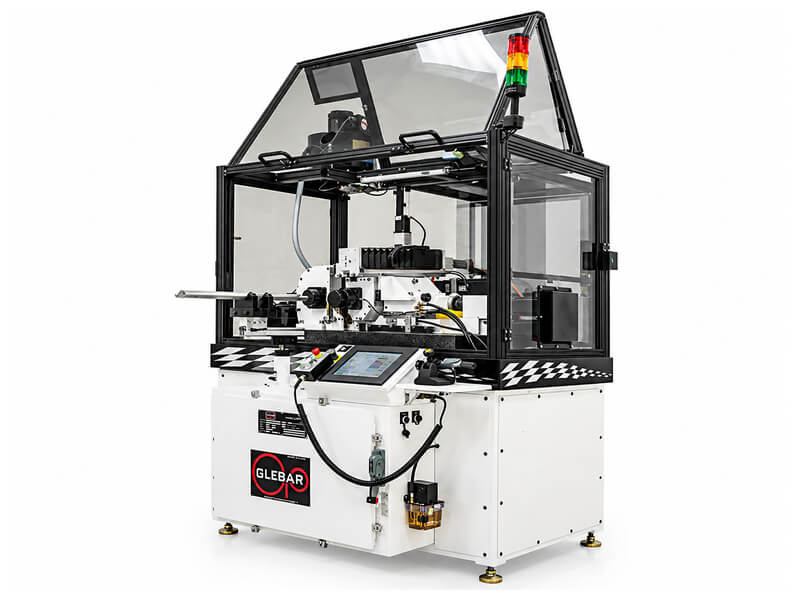
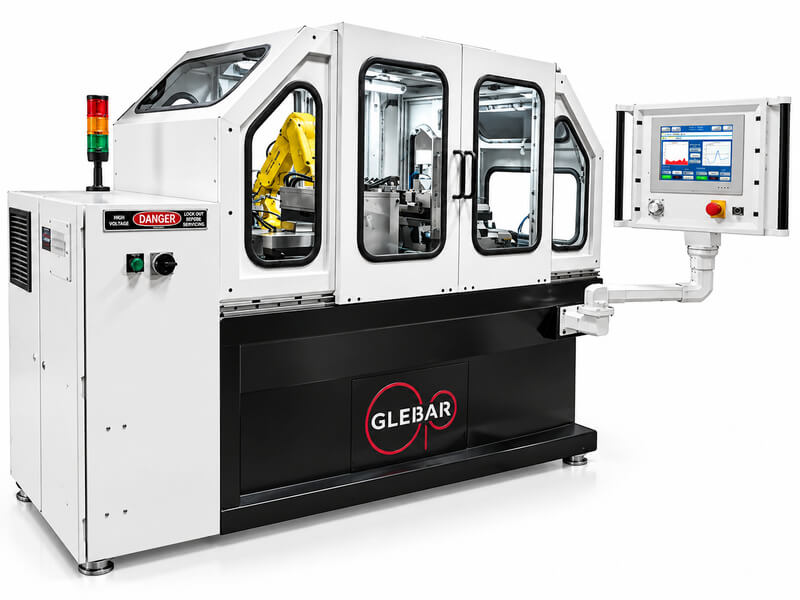
For the outer sleeve, the OD of the blank tubes is precision ground using the Glebar GT-610 Thrufeed Grinder, achieving a surface finish of 3–6 RMS while consistently maintaining a Cpk of 2.0–3.0 on the outside diameter. The process removes 0.005″ of material and reliably holds a tolerance of ±0.0005″ within a fully automated, turnkey manufacturing process.

Infeed/Thrufeed Centerless Grinder: GT-610

To infeed the shape of the inner tube, the Glebar GT-610-CNC is also utilized to maintain tip tolerances of ±0.0002″. This process drastically reduces scrap rates and is designed for high-volume production via:

  • A patented movable work rest blade precisely positions the tube radius for accurate, repeatable grinding.
  • Integrated automation, including a Fanuc robot and step feeder, that measures each part and automatically adjusts the process to reduce scrap and support high-volume production.

For quality control, the Glebar P4200 Profile Gauging System measures critical dimensions, including radius geometry, and provides real-time feedback to the GT-610 for automatic wheel dress and size compensation. This closed-loop process ensures consistent part quality, process stability, and reduced scrap rates.

P4200 Profile Gauging System


Challenge #2:
To Efficiently Cut Arthroscopic Shaver Teeth

Manufacturers producing arthroscopic shaver teeth must achieve tight tolerances, burr-free cutting edges, and exceptional surface quality without introducing heat-affected zones, recast layers, or metallurgical changes. Conventional machining methods can generate thermal damage and increase overall manufacturing complexity.

Recommended Approach:
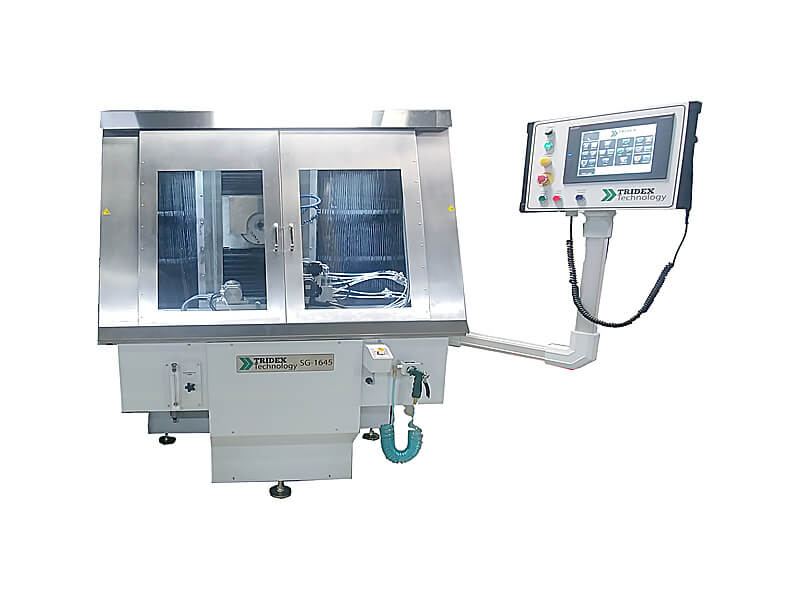
Tridex SG-1645 Electrochemical (ECG) N/C Surface Grinder

The Tridex SG-1645 Electrochemical Grinding (ECG) N/C Surface Grinder produces burr-free cuts while maintaining tight tolerances and eliminating heat-related metallurgical damage. By combining an abrasive wheel, DC voltage, and electrolyte, ECG removes material through electrochemical dissolution and mechanical grinding, unlike EDM or laser processes that can alter material properties.


Curved shaver teeth are ground individually, while straight-cut teeth can be stacked up to 30 high with cycle times of approximately 10 seconds per part. CNC controls, precision components, and an optional pallet loader maximize accuracy, repeatability, and throughput.

ECG achieves full-depth, burr-free cuts in a single pass with no heat-affected zone, recast layer, or work hardening. Minimal wheel wear reduces dressing frequency and can extend wheel life by up to 20× compared to conventional grinding.

Electrochemical Grinding: SG-1645

Alternative Approach: MicroBlasting as a Secondary Process to EDM or Laser Cutting with Comco AccuFlo AF10

Laser cutting and wire EDM enable the fabrication of highly complex tooth geometries with precise dimensional accuracy. However, these methods are slower than electrochemical grinding, and can create “Heat-Affected Zones,” leaving behind slag or recast. Micro-abrasive blasting can be used as a secondary finishing process to remove these imperfections.

Comco’s MicroBlasting technique removes the teeth oxide layers and discoloration, smooths pulse marks and removes remelt restoring the device to uniformity. Aluminum oxide, a hard abrasive (registering at 9 on the Mohs scale of hardness), works well because it effectively transfers energy to a brittle oxide layer and shatters it away quickly.

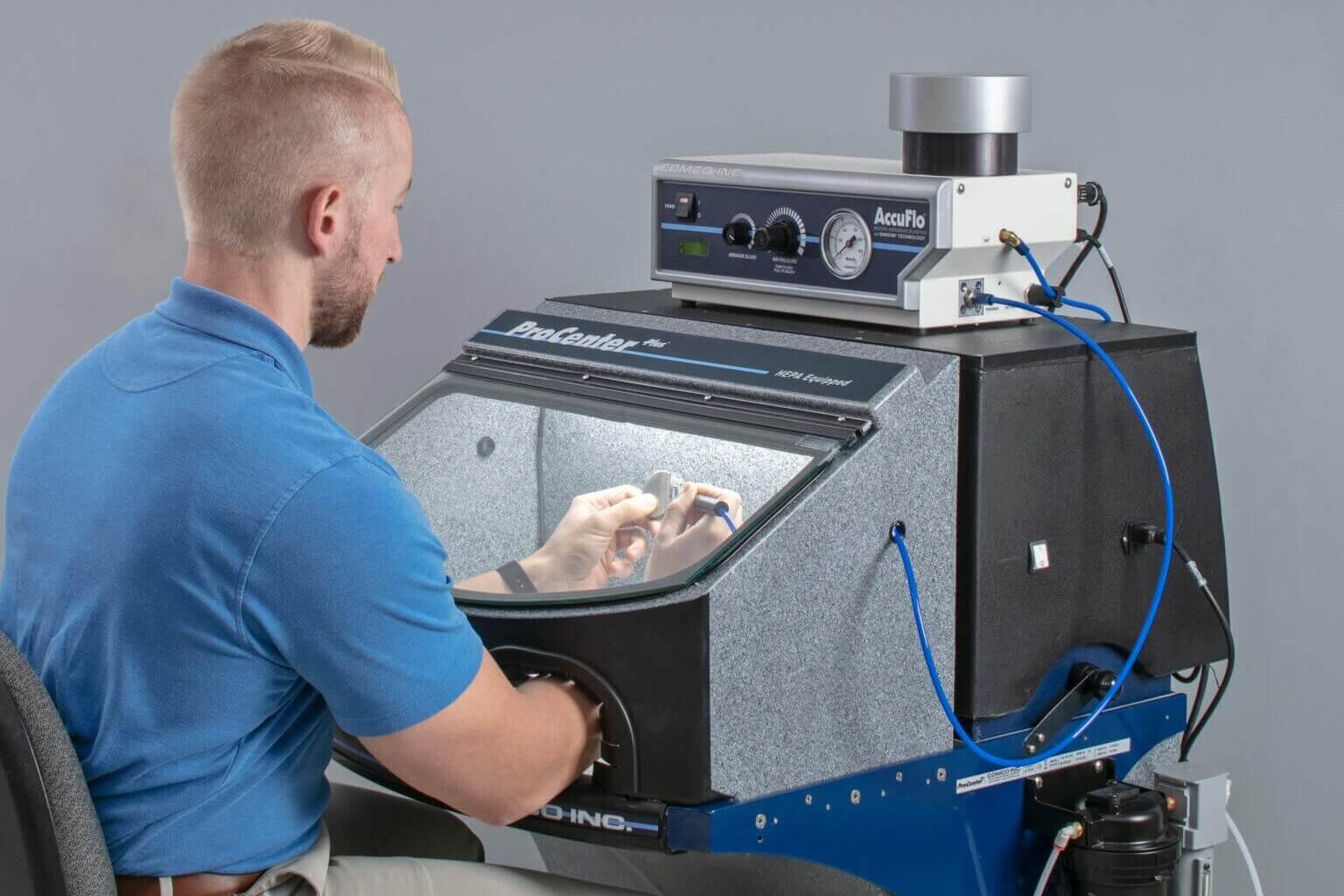
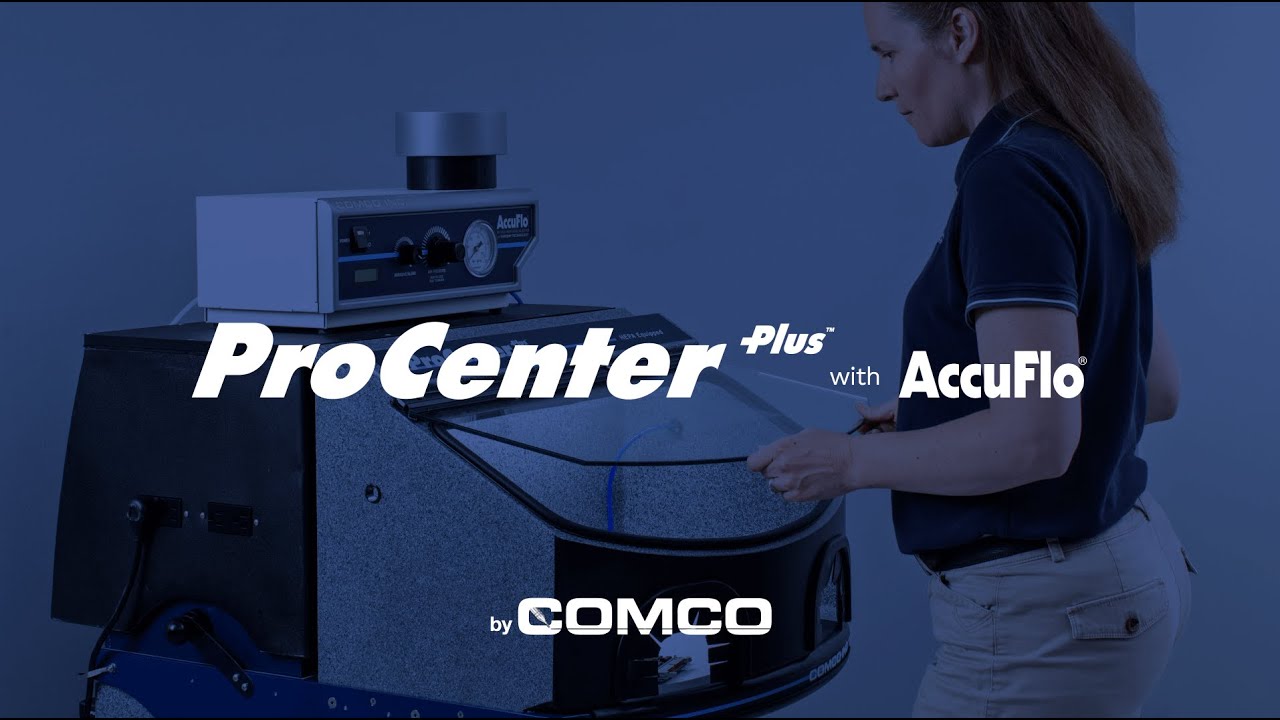
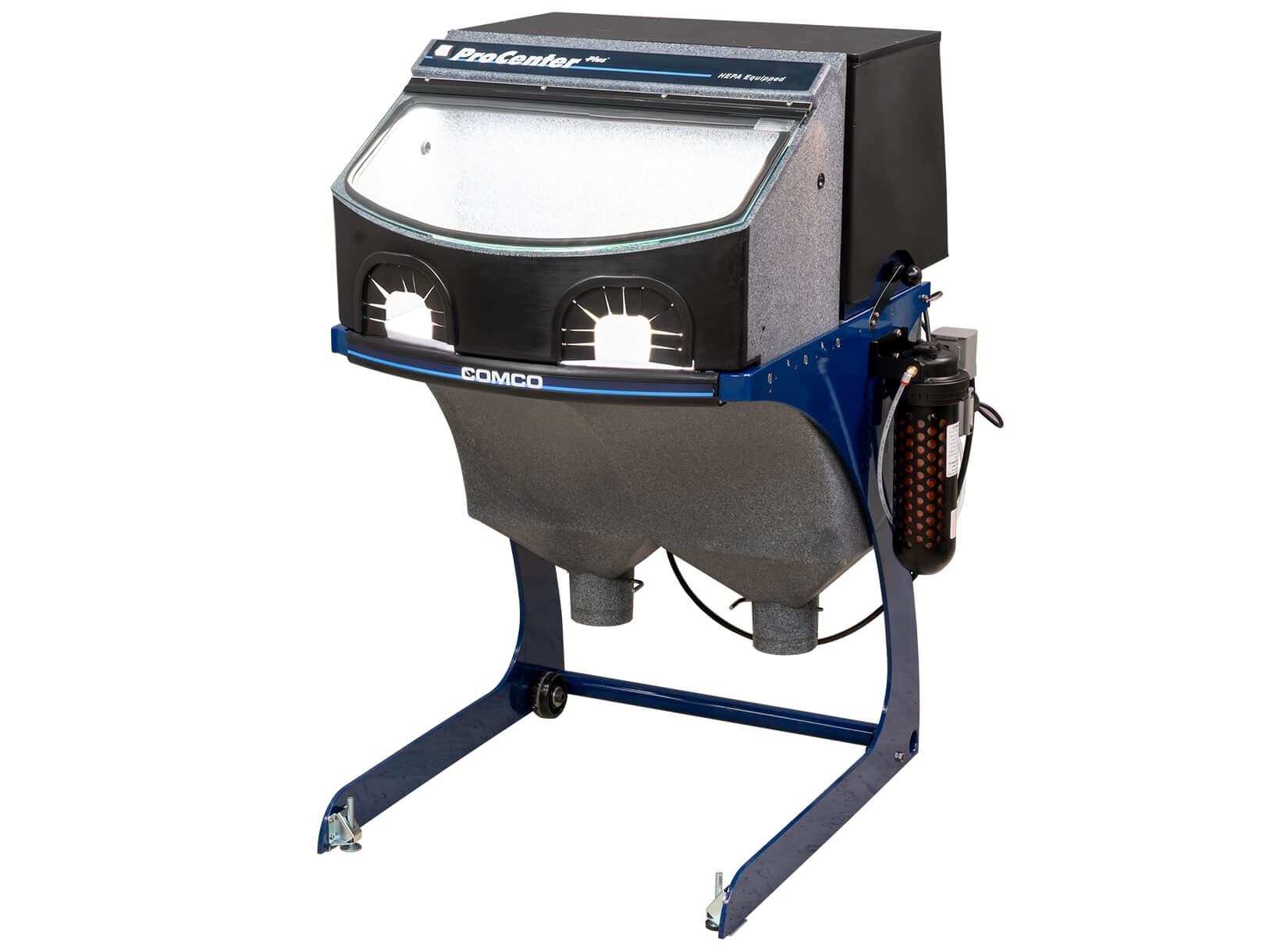
Comco AccuFlo and ProCenter Plus manual MicroBlasting system

Challenge #3: To Texture the Hub to Improve Adhesion to the Overmold

If the shavers are installed in a polymer hub, MicroBlasting may also be used to engineer a surface finish to promote and optimally bond between the stainless and polymer materials.
Recommended Approach: Comco AccuFlo AF10 Blaster Equipped with Ring Nozzle (ProCenter Plus)

A textured surface finish increases the pull strength of the bond. MicroBlasting with a sharp cutting abrasive, like aluminum oxide, efficiently textures the surface. Blasting properties can be controlled to match the specific surface requirements to best bond with a hub.

AccuFlo abrasive blaster: AF10

Work with our Engineers to Develop the Optimal Manufacturing Solution

Whether you’re developing a complete process or addressing a specific manufacturing challenge, our engineers are ready to help. We understand that no two applications are alike, which is why we work closely with you to identify the solution best suited to your unique requirements.

Rare Earth Elements: Tackling Unique Production Challenges for High-Tech Applications

The manufacture of Rare Earth Elements (REEs) is essential to modern industry, driven by the increased demand for high-tech applications and renewable energy technologies.

However, the term “Rare Earth Elements” can be misleading as these elements are not actually scarce. They are primarily found in compounds rather than in their pure metal form, which makes isolation and purification challenging. Although ample amounts exist in the Earth’s crust, REEs are distributed as trace impurities. To achieve usable purity levels, it is necessary to process large quantities of raw ore, a process that can be both costly and energy intensive.

Understanding Rare Earth Elements

Rare Earth Elements (REEs) consist of 17 elements, which include 15 lanthanides, as well as scandium and yttrium. Their unique properties—such as conductivity, magnetic strength, fluorescence, and luminescence—result from their 4f electron configurations, allowing interactions that are not observed in other elements.

Industrial Reach

REEs are utilized in a variety of industries ranging from electronics, nuclear fuel, clean energy technologies, and advanced manufacturing. In recent months, some of the most common requests for MMT’s innovative grinding equipment and solutions stem from the following sectors.

Aerospace: The aerospace industry relies heavily on REEs for a variety of critical applications. These unique materials allow for the production of advanced components that are both exceptionally strong and lightweight. Such characteristics are essential for manufacturing cutting-edge aircraft and spacecraft, making them indispensable for continued aerospace innovation.

Automotive: Rare earth materials are extensively used in the Electric Vehicle (EV) sector for a variety of automotive applications, such as catalytic converters and advanced sensors. These components greatly improve vehicle performance and emissions control, critical for developing cleaner and more efficient vehicles.

Clean Energy: REEs play a crucial role in the growth of the clean energy sector, especially in generators that convert mechanical energy into electricity. Magnets made with neodymium and praseodymium are essential components in these applications, particularly in the generators that facilitate power conversion in wind turbines.

Electronics: Important for manufacturing key electronic components, REEs are utilized for applications such as batteries, magnets, and phosphors. These elements are essential for powering devices and improving their functionality, enabling the production of high-performance and environmentally friendly products.

Addressing Limited Domestic Availability

Given the heavy reliance on REEs by a variety of U.S. sectors, there have been recent concerns surrounding domestic availability of these materials.China, for example, has been the dominant player in this market, producing approximately 70 percent of the world’s REEs. After new restrictions announced by China in 2025, the U.S. implemented several initiatives to assist with supply chain dependencies.

  • U.S. Administration Investment: On October 20, 2025, the U.S. Administration garnered a deal with the Prime Minister of Australia for REEs and other critical minerals that are needed for commercial sustainable energy production and technologically advanced military hardware. Both parties have committed to provide at least US $1B towards projects worth $US 8.5B in the U.S. and Australia.
  • Federal Investments: The U.S. Department of Energy (DOE) invested over $17M in projects to develop advanced processing technologies for REEs and critical minerals.
  • Strategic Partnerships: Collaborations with companies such as USA Rare Earth are aimed at developing a comprehensive supply chain from mining to magnet production.
  • Domestic Production: Initiatives such as the one led by ReElement Technologies and Purdue University are focused on refining and selling REEs domestically, addressing national security concerns and reducing pollution from traditional mining processes.

Production Challenges

There are numerous challenges associated with the production of rare earth elements, particularly when it comes to processing their unique properties. It is critical for manufacturers to grasp the sensitivity involved in the manufacturing processes due to the delicate nature of REEs and the need for precise control in their applications. Their production entails complex procedures that require careful handling to avoid contamination and to ensure high purity.

Case Study

Glebar, and MMT Company, is at the forefront of providing REE manufacturers with innovative technologies to achieve accuracy and precision, ensuring high-quality end products. To demonstrate the value of MMT’s manufacturing solutions, we highlight the following resource:

Glebar GT-610 Enhances Rare Earth Magnet Manufacturing
Delivering Fully Automated Process to Ensure Unmatched
Production Volume and Manufacturing Efficiencies

Read Case Study

Conclusion

Investing in rare earth element (REE) production is crucial for fostering innovation and sustainability in today’s industrial sectors. Manufacturers must also collaborate with solution providers who understand the unique challenges involved in processing these delicate materials. These partnerships ensure that complex manufacturing procedures are managed carefully, resulting in high purity, quality, and precision applications.

Real-World Case Studies: Proven Solutions to Enhance Grinding Production

MMT empowers the medical and industrial sectors with cutting-edge grinding technologies, including precision centerless, electrochemical, and cutoff grinding. Our innovative solutions, utilizing Glebar and Tridex equipment, not only maximize efficiencies but also significantly reduce costs, enabling full manufacturing potential.

To showcase the transformative impact of our solutions, we invite you to explore our case studies, highlighting how we help drive success for our customers.

Case Study: Guidewires

Delivering 2x Time Savings for Part-to-Part Cycle Time with the Glebar CAM.2

Challenge: A leading guidewire manufacturer turned to Glebar with a critical challenge – to create an innovative process that would significantly reduce cycle times while achieving the precise sharp corners essential for medical guidewires.

Solution: Glebar provided a configurable grinding system with the CAM.2 for various guidewire geometries using a combination of modes to efficiently grind parts. This provided the customer with multiple advantages, including:

  • Mode 1: A profiled grinding wheel to maximize material removal for taper transitions and shorter cycle times.
  • Mode 2: A secondary spindle with a second grinding wheel to make sharp transitions without sacrificing speed.
  • Programmable Part Extractor (PPE): This feature enabled rapid, accurate positioning of the wire, further reducing part-to-part cycle time.
  • This customized solution delivered 2x time savings for part-to-part cycle times.

Case Study: Needle Pointing


Achieving Time Efficiencies Utilizing the Tridex PGS-100

Challenge: Tridex Technology aimed to create a highly accurate needle pointing process that eliminates taping and deflection while simplifying setup and changeovers for all types of points in the industry.

Solution: Tridex developed a customized Burr-Free Electrochemical Point Grinding System utilizing the PGS-100. This provided the manufacturer with several advantages, including:

  • Rapid setup and changeover times, leading to increased efficiencies.
  • A fully programmable pointing and material handling system designed for medical device points on tubes or solid wire, ensuring versatility.
  • A servo-controlled design that delivers high precision rotation and repeatability.
  • Simple tooling for loading and unloading, enabling operators to manage multiple machines simultaneously.

Case Study: Hydraulic Spring Lifters


Enhancing Quality and Consistency with the Glebar GT-610

Challenge: A prominent industrial manufacturer asked Glebar to create an automated grinding process for high volumes of stainless steel shafts used in hydraulic spring lifters, aiming for an 8Ra surface finish while integrating with their existing automation and superfinishing line.

Solution: Glebar developed a solution with the GT-610 Thrufeed Centerless Grinder featuring a conveyor, sensors, and a safety enclosure. This provided the manufacturer with several benefits, including:

  • HMI controls to enable one-touch operation and inline gauging.
  • Stainless-steel shafts with a pass through a pre-feed sensor for automatic grinding, removing .021″ of stock with a diameter tolerance of +/- .00020″ and roundness in the 50 millionths range, delivering true precision.
  • A contact gauge checks geometric accuracy, sending data to the grinder for automatic adjustment to maintain accuracy.
  • A post-feed sensor counts parts for dressing, enhancing consistency.

Read the Full Case Study Here


Total Catheter and Guidewire Solutions

MMT offers an extensive array of innovative solutions for catheter manufacturing, automation, guidewires, and abrasives. These exceptional offerings are backed by MMT’s renowned, trusted brands, ensuring you receive the highest quality across all your production needs.

Wire Stripping for Guidewires

Comco, an MMT company, provides MicroBlasting technology that can be used to perform delicate cleaning without damage to the underlying part. Whether you need to strip coatings, remove residues, clean hot runner nozzles, our process is effective, streamlined and safe.

Guidewires

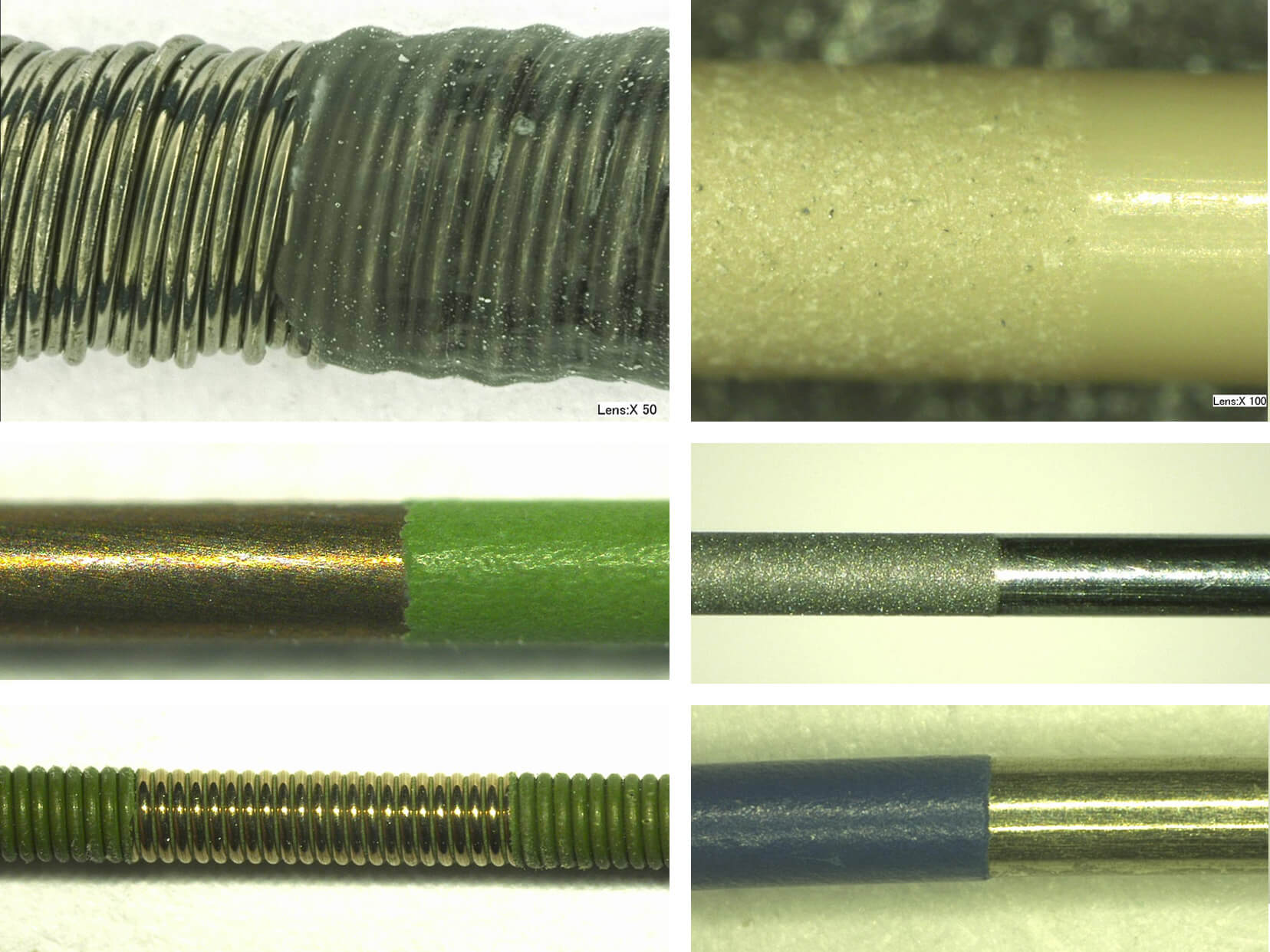
Coatings applied to guidewires enable them to move smoothly throughout the body. However, these smooth coatings are not conducive to bonding the wire to end components. This makes it necessary to remove small sections of the coatings to provide a suitable surface for bonding.

MicroBlasting is an efficient method to safely and effectively remove coatings with a sharp delineation.

How sharp is that delineation? <0.005″

Guidewire Types

A wide range of guidewire size and materials can benefit from the MicroBlasting process.

Stainless steel or nitinol wire diameters typically range from 0.014″ to 0.035″ and the Ring Nozzle can accommodate wire up to 0.125″ in diameter. Guidewires of any length can be accommodated, whether they are standard (145 cm -190 cm) or exchange-length (260 cm – 400 cm).

Coatings which can effectively be removed include: PTFE, PVA, and PEG.


MicroBlasting Method

Equipment: AccuFlo abrasive blaster, ProCenter Plus and Ring Nozzle

Abrasive: Sodium bicarbonate or wheat starch

Pressure: 80 psi

Orifice: 0.040″

Nozzle: Ring Nozzle with 5 x 0.030″

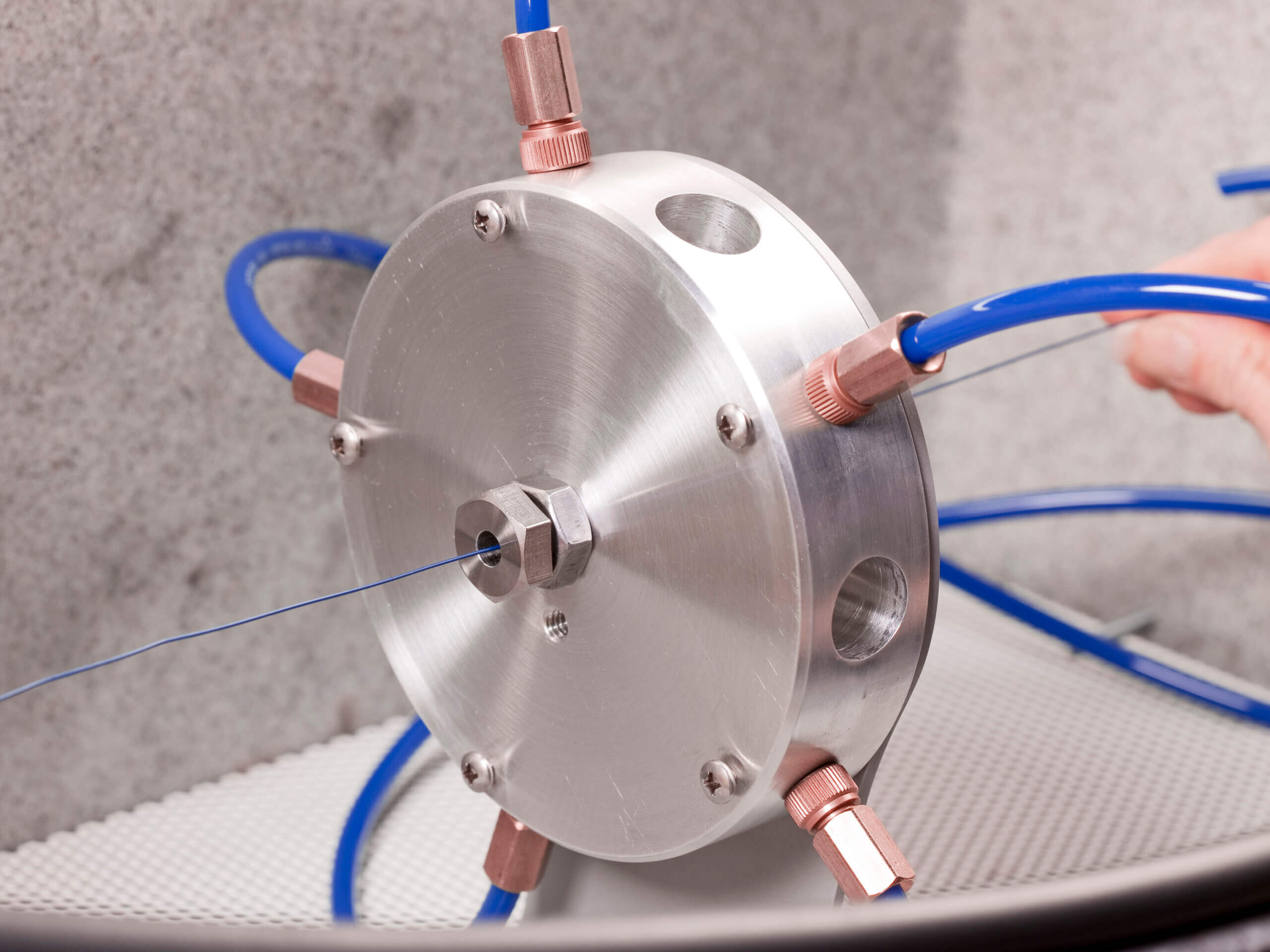
Configured with five Hi/Performance nozzles, the Ring Nozzle is designed to spread the abrasive flow uniformly over a circular cross-section for sharp delineation between the coated and uncoated regions.

Ring Nozzle for Wire Stripping inside Comco's ProCenter Plus

Why MicroBlasting?

The selective cleaning process uses the abrasive qualities of MicroBlasting to carefully erode layers of unwanted material from a base substrate. The process takes advantage of the different physical properties of the two layers. By choosing a sharp soft abrasive, MicroBlasting cuts through the soft ductile coating without damaging the underlying wire. Additionally, MicroBlasting abrasives of choice (sodium bicarbonate or wheat starch) are easily cleaned and biocompatible.

Comco ProCenter Plus combined workstation and dust collector for manual MicroBlasting

Total Catheter and Guidewire Solutions

Comco’s MicroBlasting systems deliver cutting-edge solutions tailored for guidewire manufacturers. In 2025, MMT acquired Comco, marking a significant expansion of capabilities, allowing both companies to better serve its customers.

MMT offers an extensive array of innovative solutions for catheter manufacturing, automation, guidewires, and abrasives. These exceptional offerings are backed by MMT’s renowned and trusted brands, ensuring you receive the highest quality in every aspect of your production needs.

Work with our Engineers to Develop the Optimal Manufacturing Solution

Whether you’re developing a complete process or addressing a specific manufacturing challenge, our engineers are ready to help. We understand that no two applications are alike, which is why we work closely with you to identify the solution best suited to your unique requirements.

Product Feature: Comco JetCenter

Built for Abrasive Environments

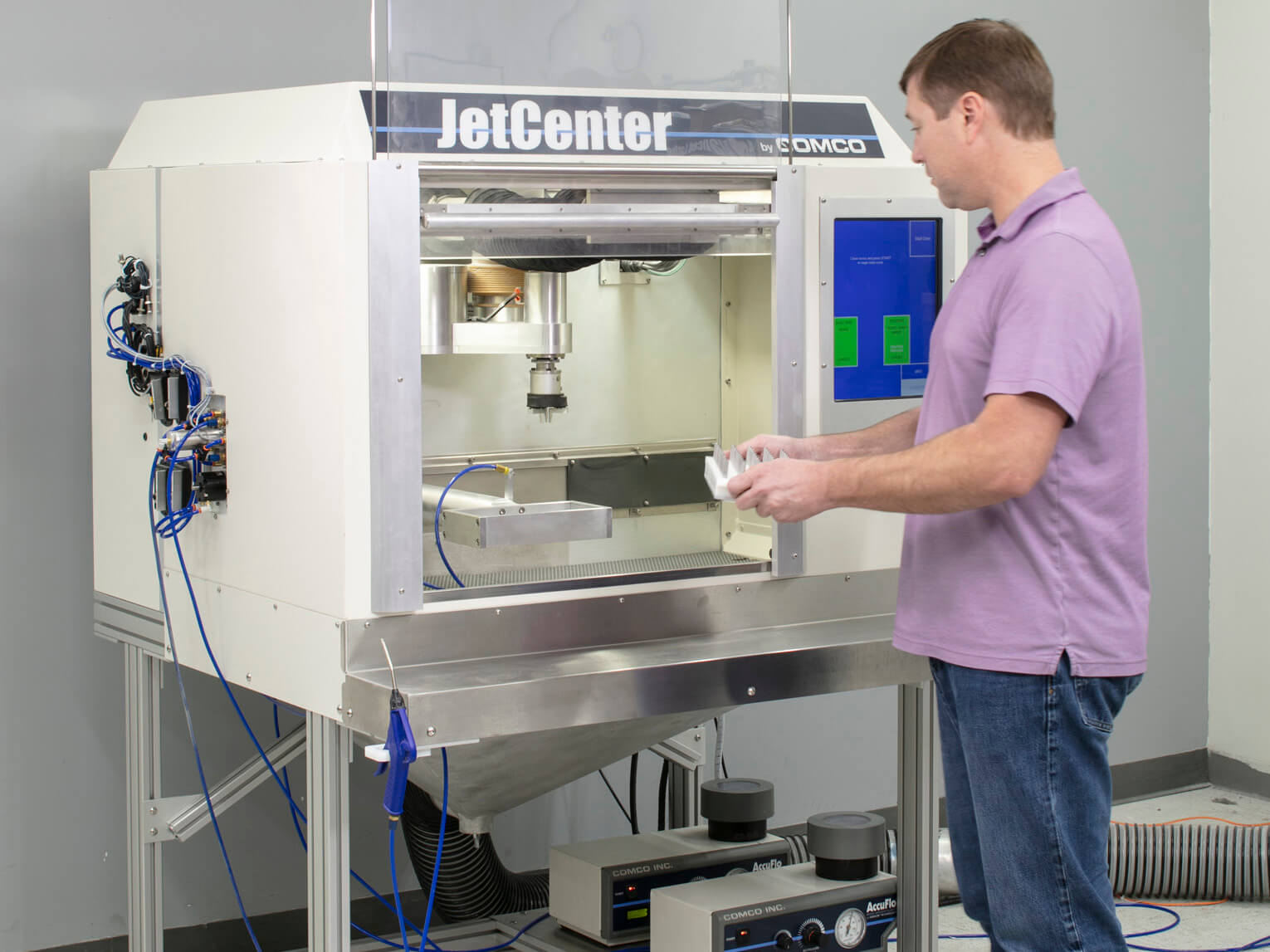
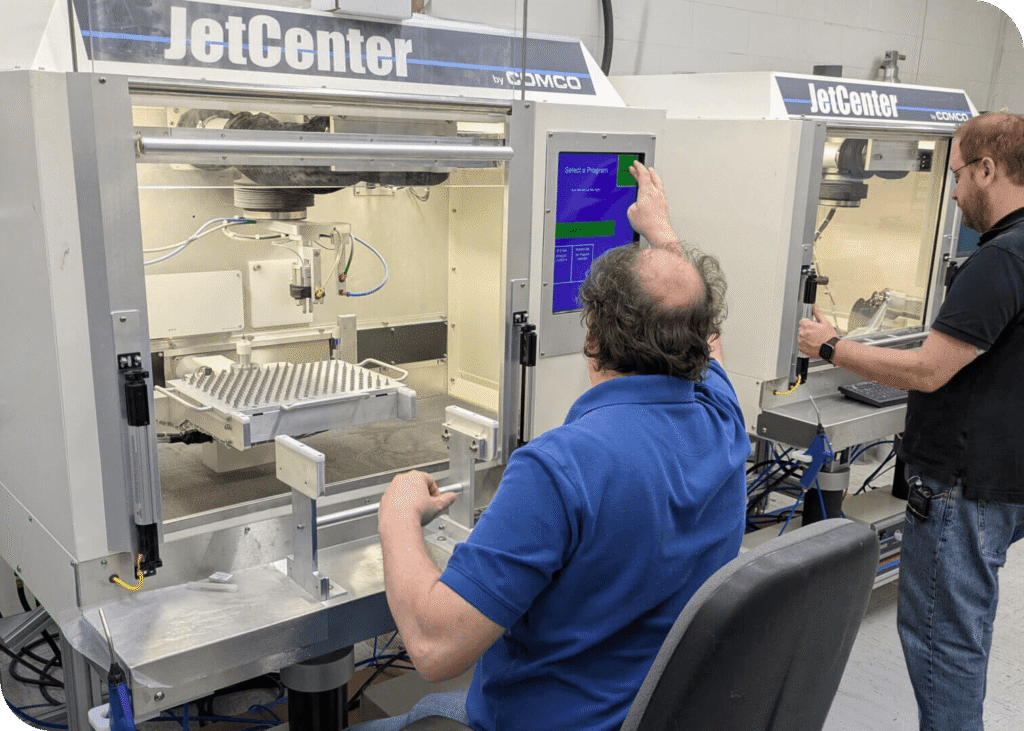
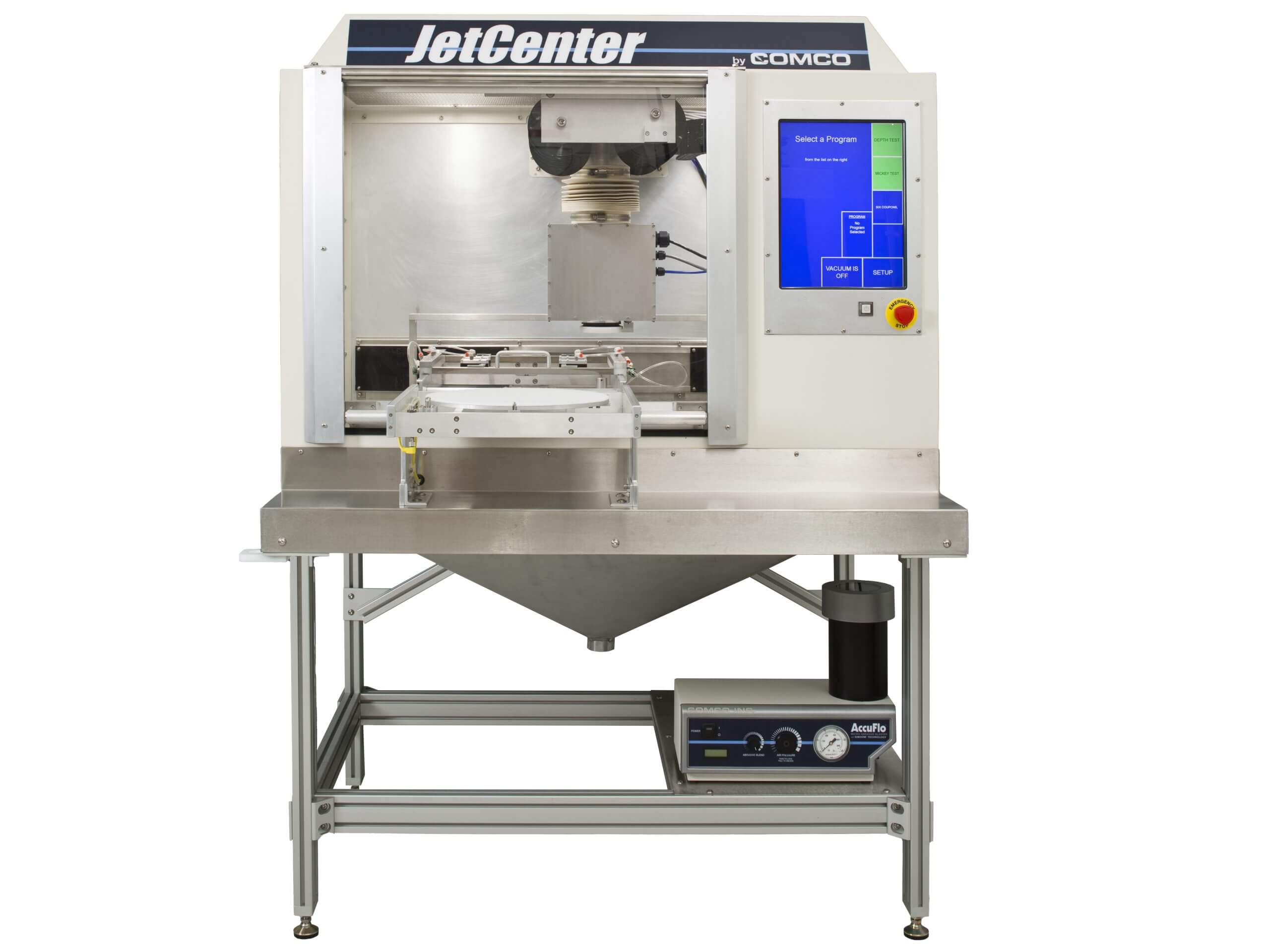
In an evolution of Comco’s automated MicroBlasting platform, the JetCenter has created new options for manufacturers. In addition to having greater travel, this system is designed to integrate additional types of motion and automation within the blast chamber. JetCenter is your go-to choice for large flat parts, or trays of smaller parts that need to be blasted individually.

The characteristics that make an abrasive a suitable choice for MicroBlasting make the protection of automation challenging. Through our engineering expertise, we’ve designed a system tough enough to withstand the harsh environments of production environments.

The Comco JetCenter provides various benefits to manufacturers, including:

Comco JetCenter Automated MicroBlasting System

Easy to Use

Designed for production environments, the JetCenter protects against accidental, improper loading of parts or mismatch of programs. Simply select a preset program, load the parts, and you’re ready to begin blasting at the press of a button.

Flexible Design

JetCenter configurations can be developed for a wide range of processes. Our expert engineers can design JetCenter systems to meet exacting standards in the medical, aerospace, electronics, automotive, semiconductor industries, and more.

Works with any Blaster

The JetCenter has been engineered to operate with either the AccuFlo or PowerFlo families of Comco blasters. The AccuFlo model is most commonly used for single nozzle applications. Multiple AccuFlo units or the PowerFlo are recommended for applications requiring multiple nozzles.

MMT Unveils the Glebar P5K Gauging System: Revolutionizing Guidewire Measurement and Metrology Processes with Unmatched Speed and Accuracy

CHARLOTTE, N.C. – September 9, 2025 – Medical Manufacturing Technologies (MMT), a leading global provider of medical device manufacturing services and solutions, proudly announces the launch of the groundbreaking, patented Glebar P5K Gauging System. Offering the fastest and most precise scanning and profiling capabilities, combined with unparalleled ergonomic flexibility for operators, the P5K is poised to revolutionize guidewire measurement and metrology processes for medical device and industrial markets worldwide.

Recent advancements in the medical, aerospace, automotive, and industrial sectors, including the creation of more sophisticated and smaller machined components, presents the growing challenge for manufacturers to achieve fully automated parts measurement to ensure patient and end-user safety and performance. While the P5K was originally developed to meet the exacting requirements of medical guidewire measurement, the innovative P5K technology accurately measures long, slender components, translating to improved manufacturing outcomes for a multitude of industries.

With the ability to scan and profile components up to 78” (2 meters) in length and 0.250” (6.35 mm) in diameter, the P5K measures at an impressive speed of 16,000 diameter readings per second. The P5K delivers 12 times the measurement of any currently available gauging system on the market (1) and provides the first available sit, stand, or sit/stand option, prioritizing operator comfort, flexibility, and productivity.

Commenting on this significant product introduction is Trent Steckler, Vice President of New Product Development at MMT, “The launch of the P5K comes at a pivotal time when manufacturers are seeking solutions that deliver not just speed but also reliability and predictability,” he stated. “Use of the P5K for guidewire and industrial parts measurement ultimately translates to significant time and cost savings achieved via increased throughput, predictive quality insights, and reduced scrap,” Steckler concluded.

Building on the strong capabilities of the Glebar P4K, a recent White Paper revealed that the P5K generates four times the data output while operating at four times the speed of the P4K. This further demonstrates that the P5K delivers first-rate data, enhancing part quality and significantly improving manufacturing efficiency.

Other significant P5K features, include:

  • The industry’s first 5-year limited extended warranty.
  • User-friendly, intuitive software—developed with the operator in mind—ensuring traceability with fully automated measurement to guarantee objectivity and reliable results with each scan.
  • Improved interface, allowing inspectors to quickly scan multiple parts with a click of the mouse to assess product quality on the manufacturing floor.
  • Advanced air bearings, enhancing the longevity of the scanning head and eliminating mechanical interference, a common issue in faster scans.
  • Extensive data analysis features, with optional SQL packages, complying with the strictest requirements and delivering flawless data centralization across multiple facilities.
  • Increased speed, permitting operators to significantly improve in-process quality control (QC) with efficient returns to the grinder and boosting overall productivity.
  • Reduced time required to establish new product recipes, accelerating deployment and minimizing training required for staff.
  • More immediate insights into size compensation, providing feedback to Glebar Grinding Systems: CAM.2, GT-9AC, and GT-610 CNC.


About Medical Manufacturing Technologies
Medical Manufacturing Technologies (MMT), a leading global provider of medical device manufacturing solutions, is a single-resource solution for automated process-driven medical manufacturing—streamlining complex medical device solutions with an emphasis on precision and finely tuned efficiency. The company offers process development, applications and equipment, technical solutions, and after-market support.

Reference
1) Comparison of MMT’s Glebar P5K Gauging System with the Royal Master Laser Gauging System, testing one sample every 0.0001 inches at a speed of 0.125 inches per second and one sample every 0.0001 inches at 1.125 inches per second.

Medical Manufacturing Technologies (MMT) Unveils the Glebar P5K Gauging System: Revolutionizing Guidewire Measurement and Metrology Processes with Unmatched Speed and Accuracy

MMT Acquires Innova

CHARLOTTE, NC and SAN DIEGO, Calif.—August 22, 2025 —Medical Manufacturing Technologies (MMT), a portfolio company of Arcline Investment Management and a leading global provider of medical device manufacturing solutions, today announced its acquisition of Innova Design, Inc. This acquisition further expands MMT’s comprehensive suite of bonding technologies, continuing its commitment to delivering advanced solutions to medical device and industrial manufacturers worldwide.

Innova Design is recognized as a pioneer in the laser bonding industry, credited with developing the first commercial catheter laser bonder in 2002. Now featuring its sixth generation of American-made laser bonders, Innova has been instrumental in producing millions of balloon catheters utilized in interventional medical procedures across the globe. The company has established itself as a trusted partner for medical device manufacturers in key markets, including the United States, Ireland, Cost Rica, Brazil, Singapore, China, and Japan.

“Today marks an important milestone as we welcome Innova Design to the MMT family,” commented Robbie Atkinson, CEO of MMT. “Innova’s innovative and pioneering spirit aligns perfectly with our mission to support global manufacturers with reliable, streamlined services and solutions. We look forward to harnessing our combined expertise to drive future innovations in the medical device industry and advance healthcare worldwide.”

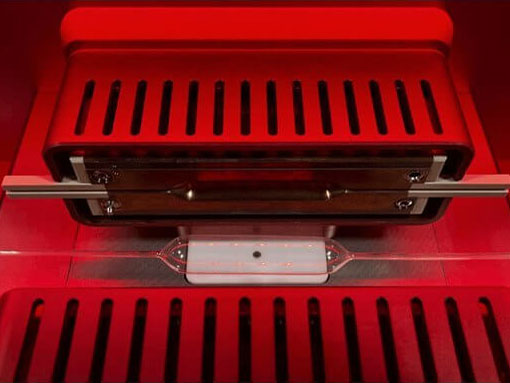
The acquisition of Innova’s laser bonder technology will complement MMT’s existing offerings, which include hot box and split die bonding solutions. The Innova laser bonder boasts superior ergonomics and innovative laser safety features. These include a motorized revolving safety door, enhanced air cooling, linear ball screw laser traverse, integrated diode pointer, beam shutter, and multiple sample holding system configurations.

President and Founder of Innova Design, Adam Chen, expressed his enthusiasm about the partnership, stating: “Innova Design is thrilled to partner with MMT to enhance bonding capabilities in the medical manufacturing space. As we continue to address the bonding needs of our customers, we are eager to leverage MMT’s resources to provide a comprehensive range of solutions to enhance manufacturing processes and boost productivity.”

MMT is committed to serving as the preferred partner in the medical device and precision manufacturing industry, focusing on predictability, reliability, yield, and throughput. MMT’s portfolio of companies includes CATHTIP, Comco, Engineering by Design, FEPeeler, GenX Medical, Glebar, Innova Design, Interface Catheter Solutions, MMT Automation, MPT Europe, R&D Engineering, Somex Automation, SYNEO, and Tridex Technology.

About Medical Manufacturing Technologies
Medical Manufacturing Technologies (MMT), a leading global provider of medical device manufacturing solutions, is a single-resource solution for automated process-driven medical manufacturing—streamlining complex medical device solutions with an emphasis on precision and finely tuned efficiency. The company offers process development, applications and equipment, technical solutions, and after-market support. Web: mmt-inc.com

About Innova Design, Inc.
Innova Design, Inc. (IDI) focuses on developing and manufacturing high-end and intelligent equipment for interventional medical device manufacturing. After more than 20 years of technological accumulation, IDI has become the leading provider and pioneer ever since it developed the first commercial catheter laser bonder in2002. With exceptional capabilities, stability and repeatability, our machines provide diversified solutions for the customers in developing their manufacturing processes and increasing productivity. IDI has become the top choice provider for leading medical device organizations. Web: innovadesigninc.com

About Arcline Investment Management
Arcline Investment Management is a growth-oriented private equity firm with $14 billion in cumulative capital commitments. Arcline seeks to invest in technology-driven, meaningful to the world industrial businesses that enable a better future. Web: arcline.com

Webinar – Automation of Secondary Processes

In this on-demand webinar, MMT’s Crew Feighery delves into the intricacies of implementing automation in the medical device manufacturing sector. Attendees will gain a comprehensive understanding of the common pitfalls that often arise during the automation scoping process and how to navigate them effectively.

Crew Feighery, Sr. Vice President of Commercial Sales & Marketing

Access Webinar Now

Whether you’re a manufacturing engineer, quality assurance professional, or operations manager, this session will provide valuable insights and practical solutions for automation processes, including:

  • The significance of the 80/20 rule and its application to medical device manufacturing.
  • Critical considerations for process integration and the importance of individual process evaluation.
  • Strategies for reviewing manufacturing drawings in conjunction with quality assurance knowledge to ensure compliance with current work instructions and specifications.
  • The role of inspection practices and the necessity of incorporating thorough quality checks despite operator fatigue.
  • Challenges related to changeover times between part numbers and product families, focusing on processes that are feasible for automation.
  • Emphasizing adherence to environmental, health, and safety regulations throughout the automation journey.
  • Collaborating with suppliers on user requirement specifications (URS) and factory acceptance testing (FAT).
  • Recognizing the risk of scope creep and the importance of buffer time within project timelines.

Furthermore, we explore the keys to successful long-term automation, from the critical nature of FAT and site acceptance testing (SAT) to the importance of operator training and cross-training practices. We will discuss how to maintain optimal machine performance, monitor input material consistency, and ensure proper maintenance routines, all while securing turn-key documentation for implemented solutions.

Product Feature

The Split Mold Balloon Forming Machine (BFMS-500- S2) delivers full servo control on the proximal and distal axis, allowing for precise and fast stretching of the parisons during the balloon-blowing process. The axis provides force control and individual loadcell systems allowing forces to be monitored and used as control parameters during the process. The BFMS allows you to quickly exchange the heat/cool block for a different size/shape balloon and comes standard with our NEW Rapid Heat Cool Mold Technology.

Split Mold Balloon Forming Machine: BFMS-500- S2

Comco ID Tube Blasting System

Removal of ID Tube Residue

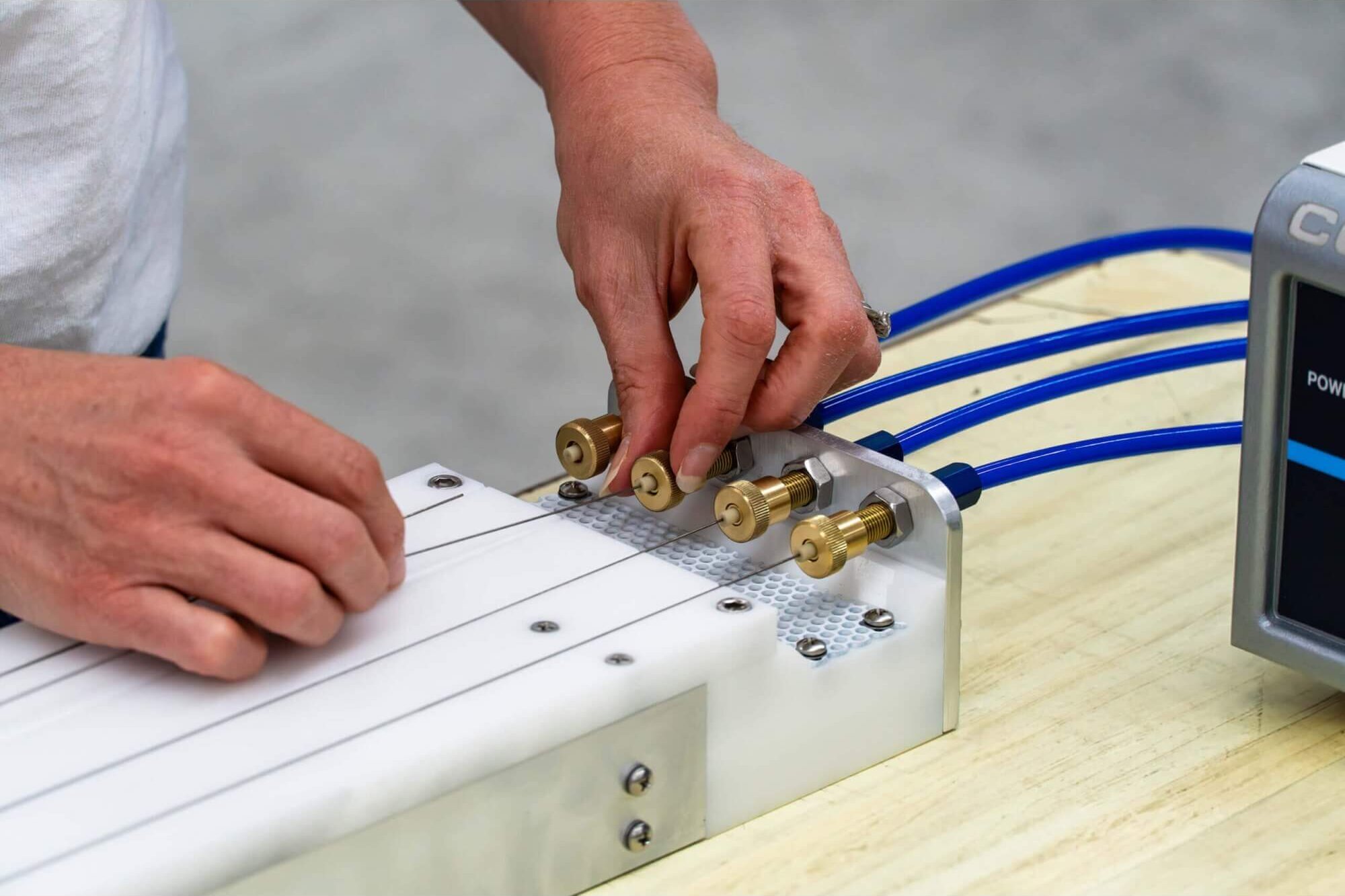
The Comco ID Tube Blasting System was created to address a common challenge within the medical device industry. As nitinol tubes have become increasingly smaller, cleaning the internal diameters (ID) of these tubes has become more difficult. The ID Tube Blasting System, utilizing Comco’s AccuFlo, effectively removes contaminants from the inner surfaces of the tubes that can accumulate during the drawing process.

When drawing a small diameter tube, the process resembles stretching gum in opposite directions. As the tube lengthens, both the wall and the diameter become smaller. This procedure involves the use of a mandrel and a lubricant. However, some lubricant often remains embedded in the interior walls of the tube. The ID Tube Blasting System offers an effective solution for removing this residue.

Microblasting the interior of the tube effectively removes lubricant residue without compromising the tube’s geometry.

When is the ID Tube Blasting System Used?

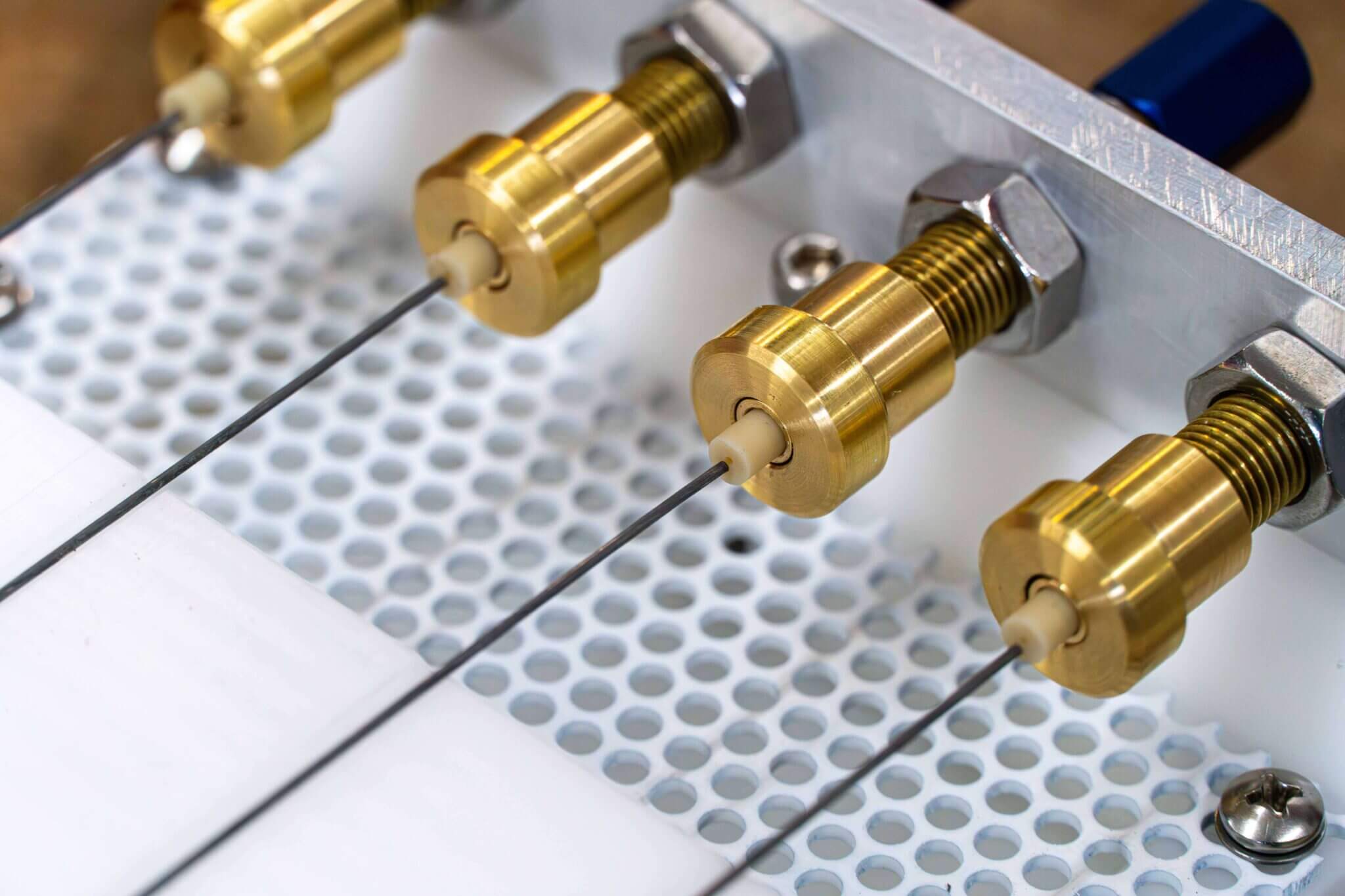
The ID Tube Blasting System is primarily for companies in the medical industry that use drawn tube (stainless or Nitinol). The ID Tube Blasting System is designed to be easy to install small diameter tubes, holding the tip of the tube in place. There are grooves for the tubes along the length of the system to keep the tubes straight while blasting. This ensures a consistent removal process of the interior walls of the tube.

Tube Diameters .010″ – .063″

Working with diameters as small as 0.010″, our ID Tube Blasting System is the only system up to the task.

Tube Lengths up to 8′

The AccuFlo can ensure consistent flowing of abrasive throughout the tubing for a consistent internal residue removal.

Process Multiple Tubes Simultaneously

With one AccuFlo, a technician is able to blast four tubes at once.

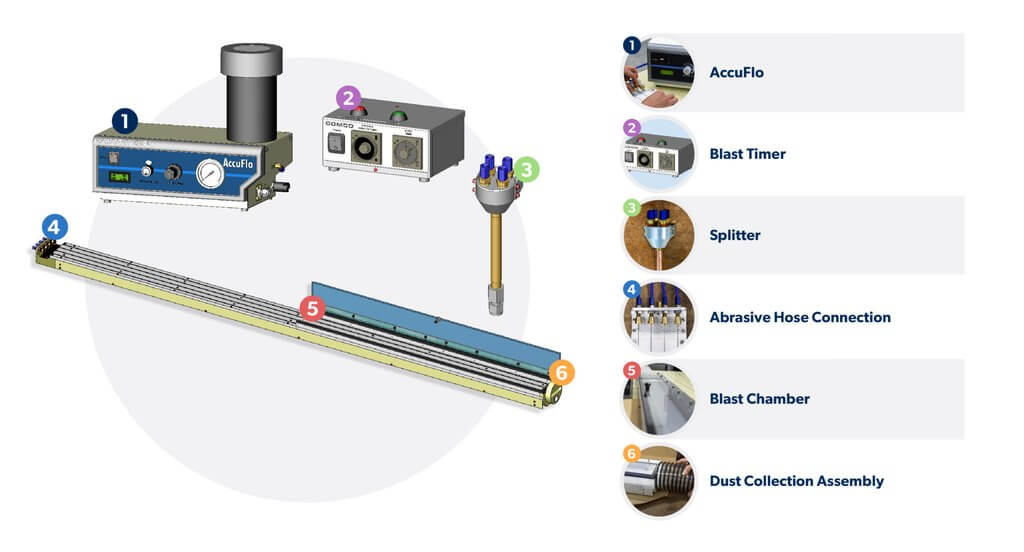
System Components

Test. Validate. See What’s Possible.

We understand that MicroBlasting is a unique process that you may not be familiar with. The proof is in how MicroBlasting can improve your manufacturing process on your parts. Our Applications Engineers have the expertise and complete range of MicroBlasting tools—from our manual stations to the fully programmable automated systems to run your samples.